Having long battled sexist neglect of her own work and what she contributed in partnership with Robert Venturi, Denise Scott Brown GCP’60 GAr’65 Hon’94 has cemented her position as a major figure in 20th-century architecture and urbanism. Photography has been key to her influence.
By Jon Caroulis
In 1960, the future of the University’s library was up for debate. Some architecture faculty met to consider demolishing the 1891 Frank Furness-designed building. Denise Scott Brown GCP’60 GAr’65 Hon’94 argued for saving it. As she recounts the story, after the meeting, an assistant professor she had never met walked up and told her he agreed with everything she said.
“Well, why didn’t you say something?” she asked Robert Venturi Hon’80.
His reply: “Do you want to have lunch?”
They had lunch, became friendly colleagues, were married in 1967, and forged a professional partnership whose writings and building projects exerted a profound influence on architecture and planning up to and beyond Venturi’s death in 2018. (Along the way, the partners led the 1980s–1990s renovation and restoration of the Furness building into what is now the Anne and Jerome Fisher Fine Arts Library, currently in the midst of an exterior refurbishment scheduled to be complete next fall.)
Now 94, Scott Brown has studied and practiced architecture and planning on three continents: in her native South Africa, the United States, and Europe. William Whitaker GAr’96 CGS’99 CGS’05, director of the University’s Architectural Archives, where Scott Brown and Venturi’s archives are held, calls her “a major figure in architecture of the second half of the 20th century and even to the present day.” From her training in both architecture and city planning, he adds, “she brought an important sensibility that had to do with looking at the world around [you] and in giving new tools to designers to make good design decisions based on what you’re seeing in the world.”
Denise Lakofski was born in 1931 in Northern Rhodesia (now Zambia) and became interested in architecture from an early age. While studying in a program at the University of the Witwatersrand in Johannesburg, South Africa, she met another brilliant student, Robert Scott Brown, whom she married in 1955. Although Denise’s life and career have revolved around her architectural and planning designs, she’s also a photographer. After her marriage to Robert, who had a background in photography, they became experimental photographers. At the university, they worked together on an architectural “show” as part of their studies, in which Robert would drive his motorcycle through city streets and Denise would sit behind him taking pictures.
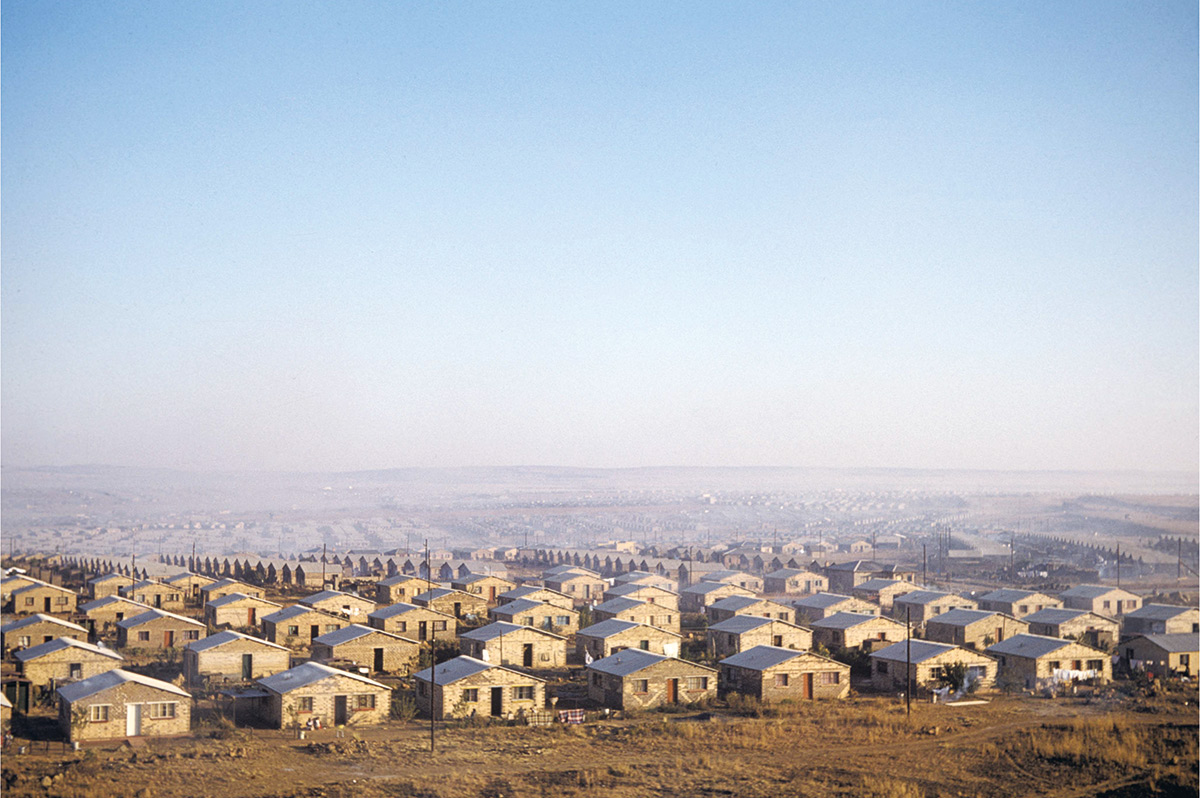
Denise Scott Brown went on to complete her degree at the Architectural Association (AA) School in London. At her urging, Robert visited her in England and also did a studio at AA. They traveled in Europe. They planned to return to South Africa, intent on developing an architectural practice informed by sociology, economics, and the other philosophical elements of what had come to be called “urbanism.”
One of their teachers recommended they go to America to study with Louis Kahn Ar’24 Hon’71 at the University of Pennsylvania. “We chose to enter Penn’s Department of City Planning because, in 1950s England and Europe, planning was considered the basis for architecture. If you were a committed and talented young architect, the next step was to study city planning, but the training in England was too prosaic. So Robert and I went to Penn to study with Kahn,” Scott Brown recalls.
“On reaching Penn, we found, to our surprise, that Kahn did not teach in the planning department. Our student advisor, the architect and planner David Crane, said, ‘Don’t worry, I’ll make sure you get the best city planning training. You need that for where you’re going.’ We were going back to Africa to work as Africans,” she explains.
“After the first semester in planning, we couldn’t believe we had lived our lives till then without what we had just learned. One example was Herbert Gans’ urban sociology course. When we met him, Gans Gr’57 Hon’03 [“Obituaries,” Jul|Aug 2025] had just moved to Levittown, New Jersey, to be a participant-observer in the birth of the community. The London East End study was on his course reading list, and he had recently completed a parallel study of Boston’s West End, recording the experiences of its inhabitants during urban renewal,” she adds, referring to Michael Young and Peter Willmott’s 1957 volume Family and Kinship in East London and Gans’s The Urban Villagers, published in 1962.
“At Penn, and in most places where it was taught and practiced, urban design wore the aesthetic and theoretical hand-me-downs of architecture. David Crane [who taught at Penn from 1957 until 1972] was a major protagonist in the struggle to get urban design beyond architecture’s discarded clothing. Gans was also one of the few members of the Penn faculty who tried to maintain the link between architecture and social sciences based on ‘non-physical’ (as they called it) urban planning. It was he who set me to study regional planning. He had lived in Nigeria, and was interested, as I was, in planning for developing areas. Some of his ideas on Third World urbanism could, I believe, be applied to American cities.”
Denise and Robert’s plans for the future were tragically thwarted when they were struck by another car while driving near Doylestown, Pennsylvania, in 1959. Denise survived, but Robert was killed. Traumatized by his death, Scott Brown poured her energies into her studies. “Penn was very important to me then. Everyone was very helpful.” She says her surroundings helped her to deal with the tragedy.
Scott Brown left Penn in 1965 to teach first at the University of California, Berkeley and then at UCLA’s newly established School of Architecture and Urban Planning. Living in California showed her how the automobile was crucial to life—and therefore architecture. Interested in how pop culture influenced architectural design, she invited Venturi to join her and her students in examining the Las Vegas strip, with its casinos and neon lights. Two developments arose from that project. The first was personal. “We had a marvelous time, and we began to fall in love,” Scott Brown recalled, as quoted in a chapter about her in Andrea Gabor’s Einstein’s Wife: Work and Marriage in the Lives of Five Great Twentieth-Century Women. “And at the end, when we came back to L.A., the last day or two [of Bob’s visit] it became a real relationship.”
The second was Learning from Las Vegas, written by Venturi, Scott Brown, and Stephen Izenour GAr’65, and published in 1972 by MIT Press. The photographs, many taken by Scott Brown, were fundamental to the book’s analysis of the automobile’s impact on the city. But the New York Times review of Learning from Las Vegas began by discussing Venturi, who already enjoyed a world-wide reputation, and hardly mentioned Scott Brown.
“That’s the story of my life,” she says.
Scott Brown was also left out in 1991 when Venturi was awarded the Pritzker Prize—architecture’s Nobel—even though they worked as a team. She stayed at home in Philadelphia while he went to Mexico to receive the prize.
“Part of it was just the sexism of the profession, but her work also really challenged architects,” says Elizabeth Greenspan CGS’97 CGS’99 Gr’06, author of Battle for Ground Zero: Inside the Political Struggle to Rebuild the World Trade Center [“Arts,” Nov|Dec 2013] and Penn Praxis Senior Fellow at the Stuart Weitzman School of Design, who is writing a book about the duo. “It had a social component, focusing on what regular people needed and wanted from the profession, and lots of architects disliked this, because it threatened their cultural status.”
“For far too long we have insisted on thinking about architecture as something created by a single heroic figure, when in fact we know that designing and constructing a building is an incredibly complicated undertaking that requires people with a variety of skills,” says Inga Saffron, the Philadelphia Inquirer’s Pulitzer Prize–winning architecture critic, who has interviewed Scott Brown and Venturi several times.
While Venturi’s earlier work and his first book, Complexity and Contradiction in Architecture, published in 1966, did introduce “a new way of thinking about architecture,” Saffron adds, “I would argue that Denise helped elevate his thinking by grafting her knowledge of semiotics, pop art, urbanism, and social housing onto his original vision, and introducing him to the ideas” of figures such as the British New Brutalist architects Alison and Peter Smithson and the avant garde group Archigram, as well as sociologist Herbert Gans, who championed the equal worth of popular and high culture.
Scott Brown’s studio on Las Vegas was “profoundly transformative for both of them,” says Saffron. “So, while Venturi is the one who may have sketched the initial images, they really worked on buildings collaboratively and, thanks to those collaborations, those designs evolved, making it hard to give credit exclusively to either one of them—and let’s not forget Steve Izenour and others.”
“This time, Denise Scott Brown’s name is on the prize.”
That’s how Saffron began her story in the Inquirer after the American Institute of Architects (AIA) awarded its prestigious Gold Medal to both her and Venturi in 2016—after changing its rules to allow more than one person to receive the prize. (Previously, Venturi had declined it, since Scott Brown couldn’t be included.)
James Timberlake GAr’77 and Stephen Kieran GAr’76 are the founding principals of Philadelphia-based architecture and design firm KieranTimberlake, whose buildings on campus include Levine Hall [“A Passion for Putting Things Together,” Nov|Dec 2003] and the recently completed Stuart Weitzman Hall. They worked for Scott Brown, Venturi, and their then partner Robert Rauch early in their careers. They say Learning from Las Vegas was unlike any book they had ever seen.
“When Learning from Las Vegas … came out [in the] early ’70s, there were strips of continuous still photographs strung together that were really kind of groundbreaking,” says Kieran. “I remember just staring at those pages. I didn’t know them at the time when I first read that, thinking, ‘Who’s behind this?’ They were just a brilliant, insightful way of looking at the world.”
“They set an example for us,” Timberlake adds. “Denise certainly in particular, and Bob as well; but she set an example that good architects don’t just design and build, they research and think and write and develop discourse in the broader profession and culture about the work of architects and planners.” That approach “has remained central to who we are as a firm.”
New York-based architect Billie Tsien, whose projects with her husband and business partner Todd Williams include the Barnes Foundation art museum on Philadelphia’s Benjamin Franklin Parkway and Skirkanich Hall on Penn’s campus, says that Scott Brown “has a very, very important place in 20th-century architecture [and] is an important planner.”
Tsien, who was quoted in Inga Saffron’s story about Scott Brown receiving the AIA Gold Medal, declaring that “it’s about time. It’s about effing time,” says of her, “She stood tall and proud, didn’t back down—never backed down. I think it teaches young women it’s a life’s journey; you don’t back down, you keep on moving forward, you don’t give up.”
Scott Brown has “faced sexism in her professional life from the beginning,” says Penn Praxis’s Elizabeth Greenspan, noting discrepancies in both pay and prestige common at the time. “When she and Bob got married and started publishing together—writing books like Learning from Las Vegas but also quite a few articles—they wanted to be seen and recognized as a pair. Both of them actually went to really extreme lengths to try to make it happen early on, correcting people, doing their due diligence, and there was just resistance every step of the way,” she says.
“Because of the sexism that pervades our society generally and architecture specifically, I think there was an unusual determination to erase Denise from the story, even though they jointly led the design team,” Saffron says. “Every time I met with her and Bob to discuss a project, it was clear she had forceful ideas about the movement of people through space, on the scale of both the buildings and the city. That way of thinking is critical to the creation of architecture. There’s no doubt that their work around Houston Hall and Perelman Quadrangle [on Penn’s campus] bears her stamp.”
In the New York Review of Architecture, Greenspan wrote about first encountering Scott Brown while working on a paper about Philadelphia’s South Street as a first-year graduate student. A Penn librarian directed her to a plan written by Scott Brown—whose other work she was unaware of at the time. “Her plan grabbed my attention, mostly for the way it proritized the needs of residents, like the construction of more and better housing,” Greenspan wrote. She learned that Scott Brown had developed the plan with activists battling a proposed Crosstown Expressway in the 1960s, which would have cut through neighborhoods in South and Southwest Philadelphia.
“She worked with residents in South Philly to fight the highway that they were going to put through there. It occupied years of her life,” Greenspan says. Scott Brown took hundreds of photos of the South Street area while the expressway was debated. Many area merchants left, but low rents attracted a new wave of idealistic and enterprising artists and shopkeepers who drove the South Street Renaissance in the 1960s and 1970s.
Scott Brown says she was influenced by architects and planners who had a “social conscience” to their work, asking how their structures and plans would affect people in the area. “The social planners are still my conscience and many of their methods are my methods,” she adds.
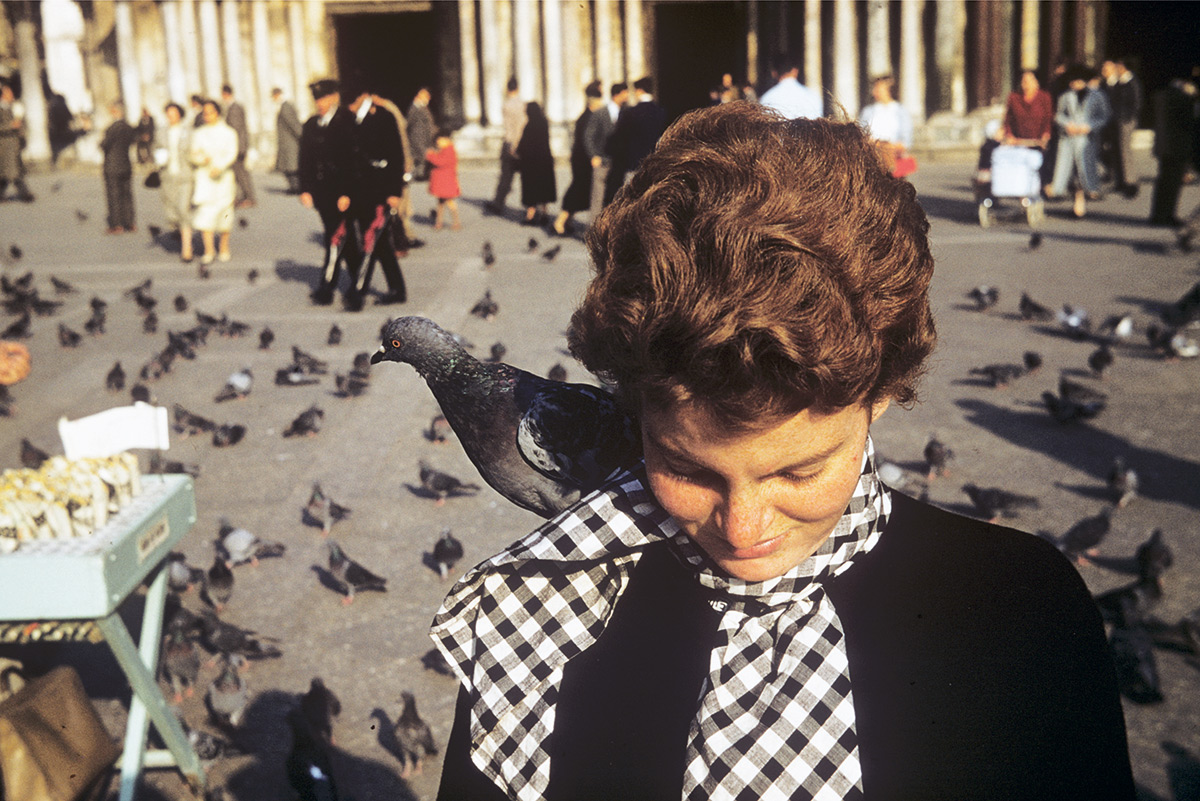
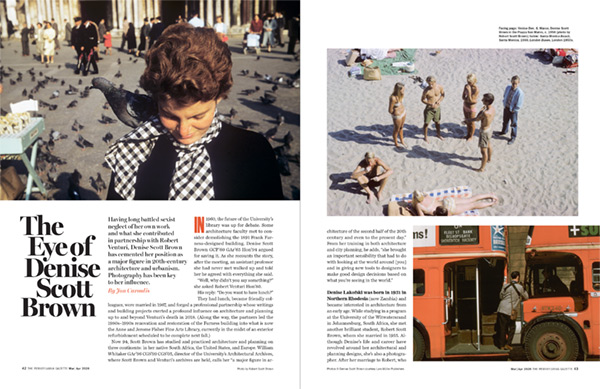
Encounters: Denise Scott Brown Photographs (Lars Müller Publishers, 2025) collects some 400 photos from the 1950s through the 1970s, selected by Scott Brown and editor Izzy Kornblatt. “In a sense, they are almost all snapshots,” says Kornblatt of Scott Brown’s visual style. “They really record a process, an instantaneous process of seeing something of interest and trying to use a photograph to capture it.” Many examine the relationships between people and the spaces they occupy. “That means that there’s a lot of social, political dynamics in these photographs.”

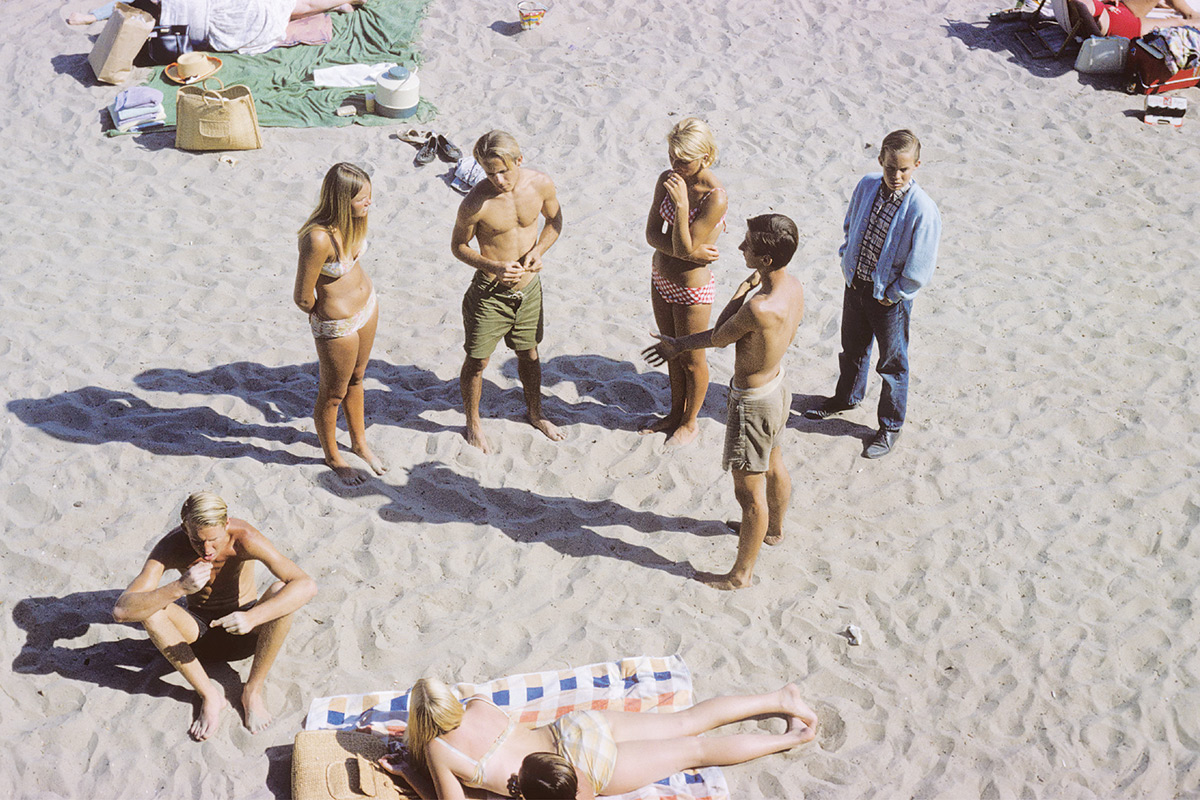

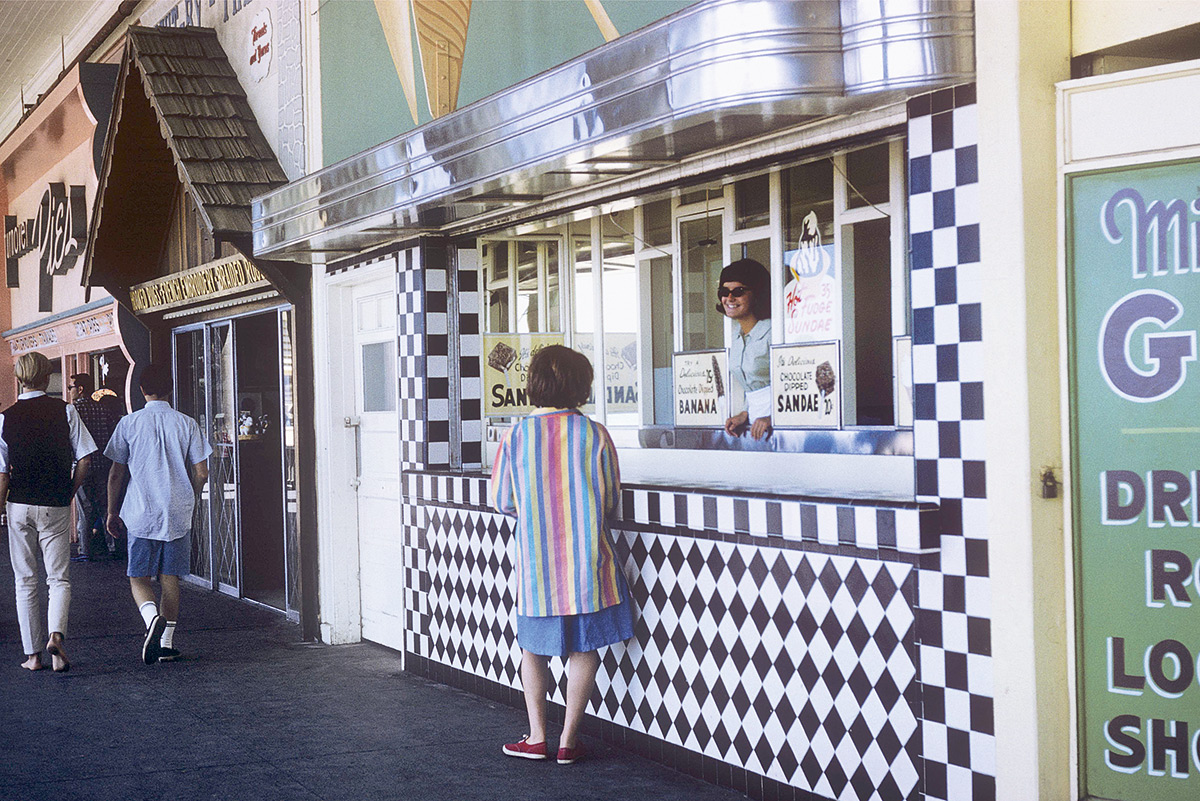
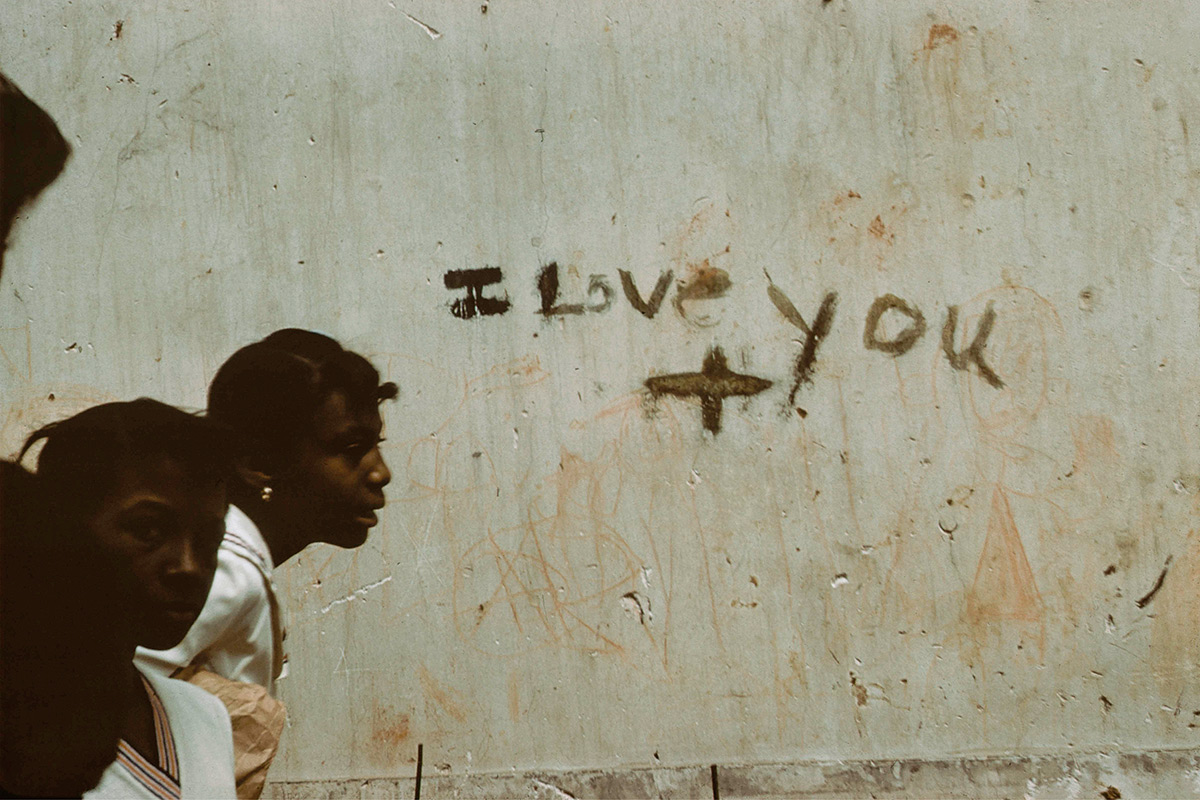
Photos from South Africa in the 1950s and 1970 provide “a really powerful record of the apartheid regime that had been instituted in 1948,” says Kornblatt. Yet the editor regards a pair of Philadelphia photographs as especially emblematic—both of this photography book and Scott Brown’s career.
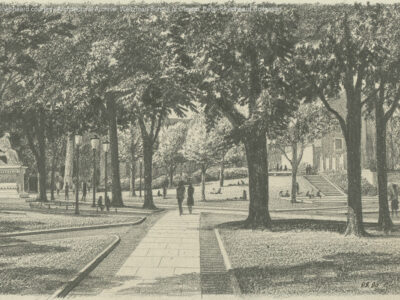
On one page, a black-and-white photograph of the Fine Arts Library is paired with the house Venturi designed and built for his mother.
The library shot is “not set up to sort of show the grandiosity of the building, with really high contrast and perfect light. It shows the way that that building sits on the campus, the way it’s seen from Locust Walk,” Kornblatt says. “And then there’s a relationship on the page between that photograph, which captures the building with all the trees around it, and the Vanna Venturi house. … To pair this house in which she played a critical role in the design, with the building in which she met Robert Venturi, it creates a relationship.” And like so much of Denise Scott Brown’s career, the relationship is multidimensional—encompassing urban dynamics, her career trajectory, and the depth of her personal connections to the places where she practiced.
Jon Caroulis is a writer living in the Philadelphia area.