How to see the Golden Gate Bridge.
Photographs by Arthur Drooker C’76
“Is it possible to see the most photographed bridge in the world anew?”
That was the question photographer Arthur Drooker C’76 says he asked himself, in the introduction to his latest collection, Thirty-Six Views of the Golden Gate Bridge. In the past, Drooker has had a taste for the offbeat and unfamiliar in his choice of subject, so this counts as a departure. Another twist: For a photographer who has traveled far and wide in pursuit of images ranging from the sites of ruins across the Americas to a remote New Mexico community called Pie-Town retracing the steps of Depression-era photographer Russell Lee to a convention of Santa Claus impersonators, this project only required a short drive from home.
Drooker writes that he was inspired by Thirty-Six Views of Mount Fuji, the series of prints created by the Japanese artist Katsushika Hokusai in 1830–32 showing Mount Fuji sometimes as the centerpiece but in others as a minor feature in the landscape. (In Hokusai’s most famous print, The Great Wave Off Kanagawa, the mountain is visible in the distance, snow-capped, in the trough of the wave.)
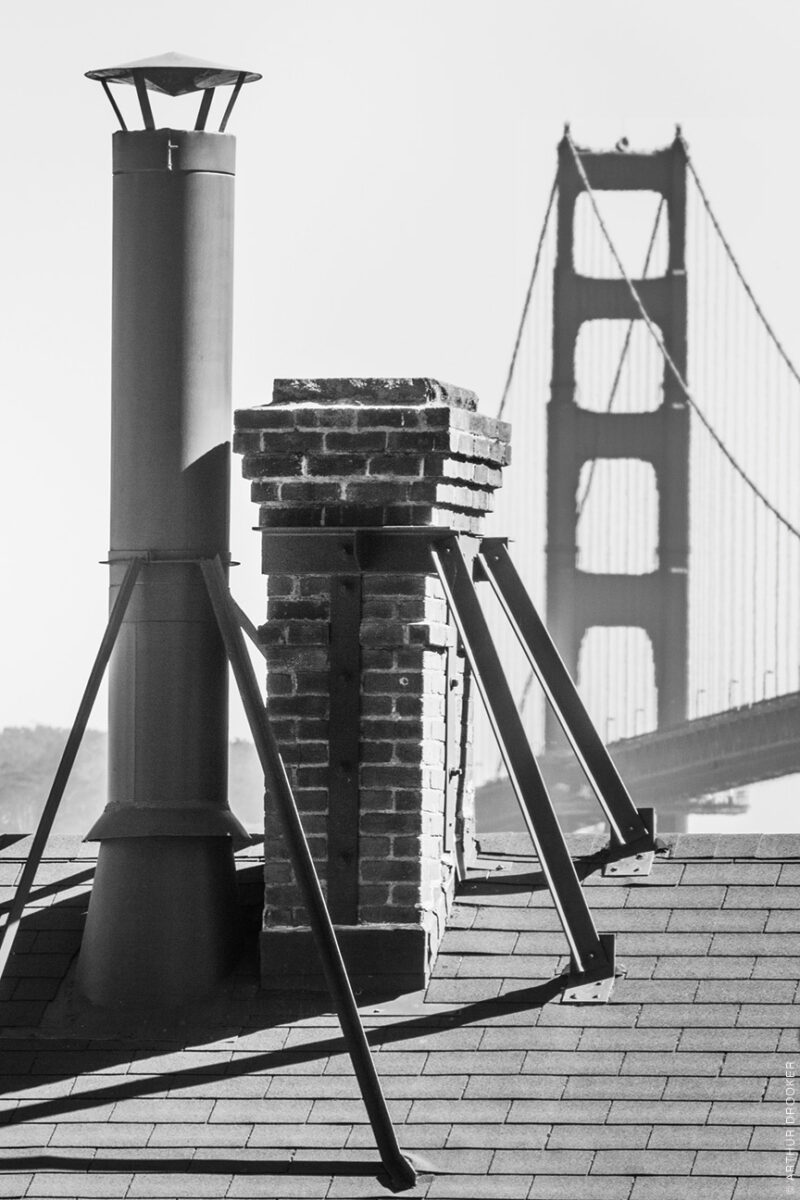
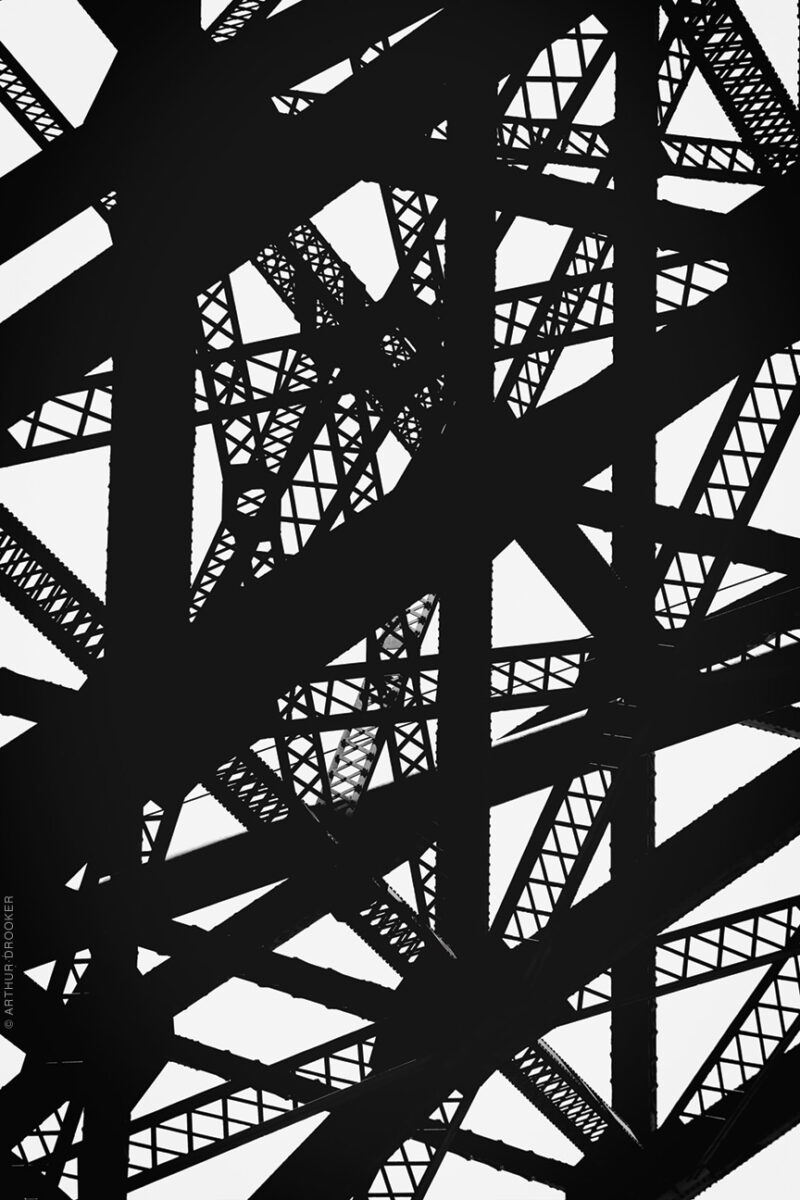
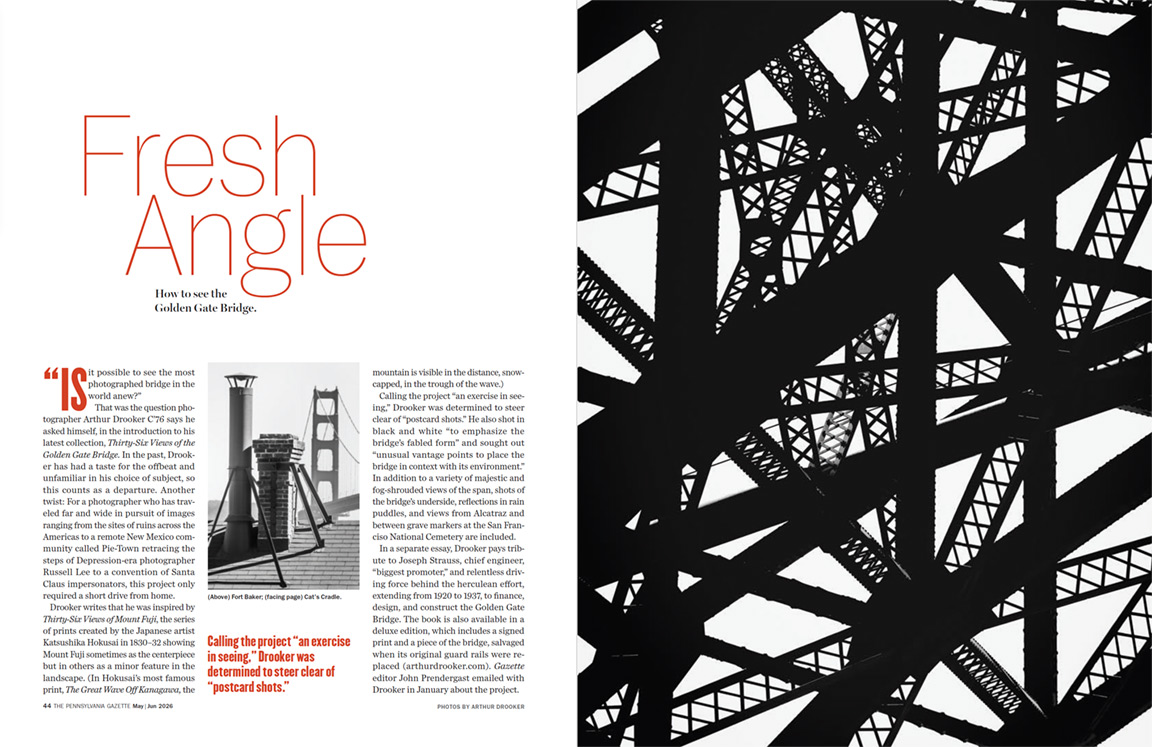
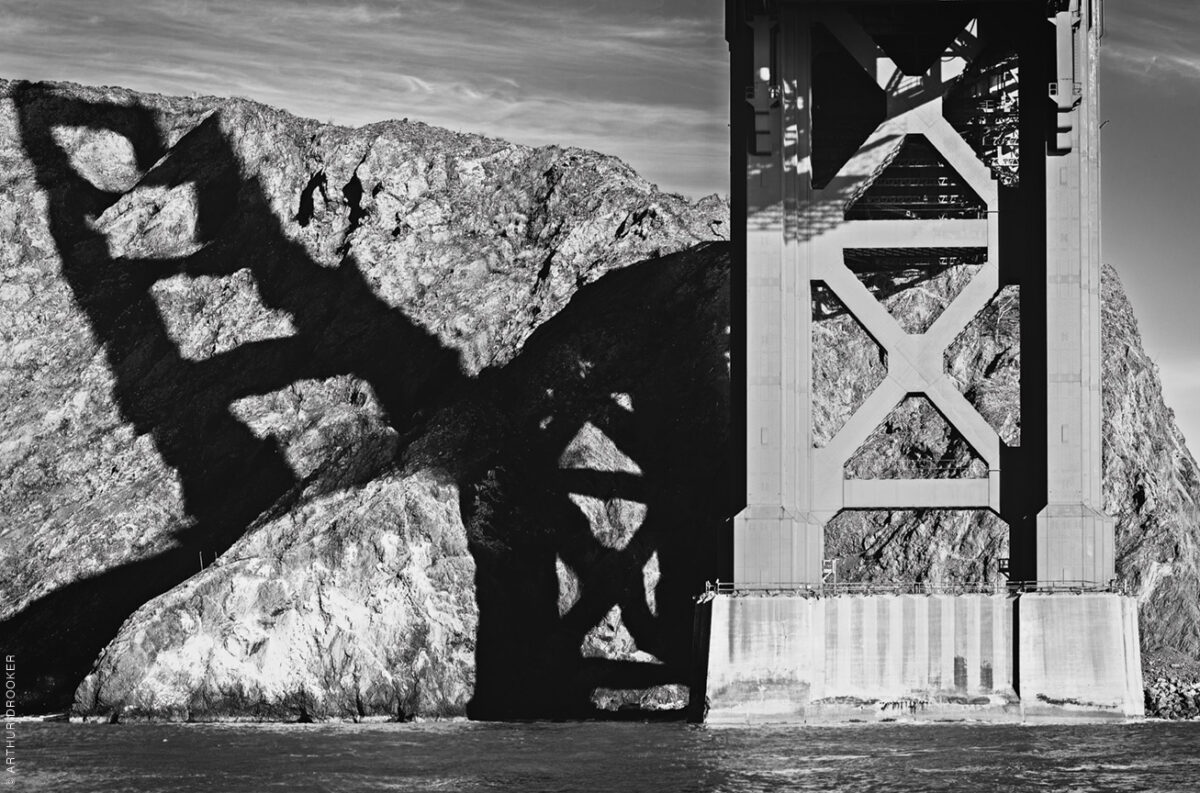
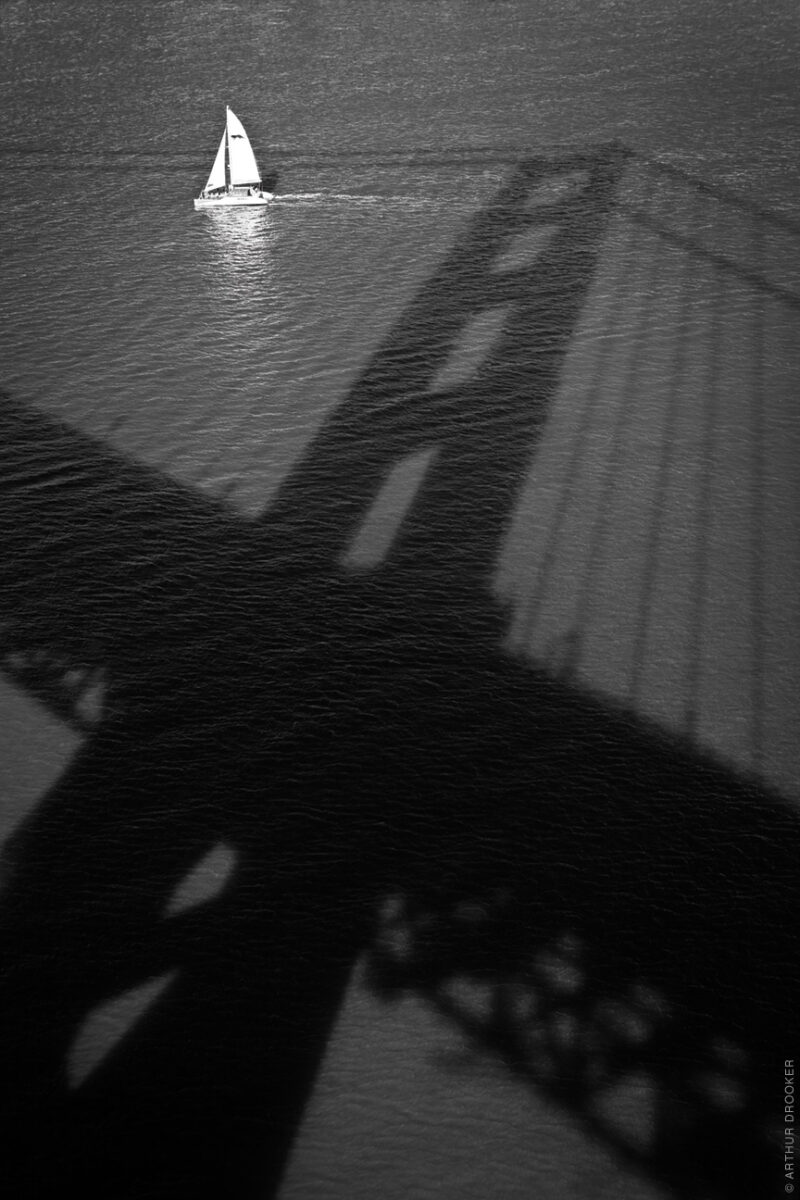
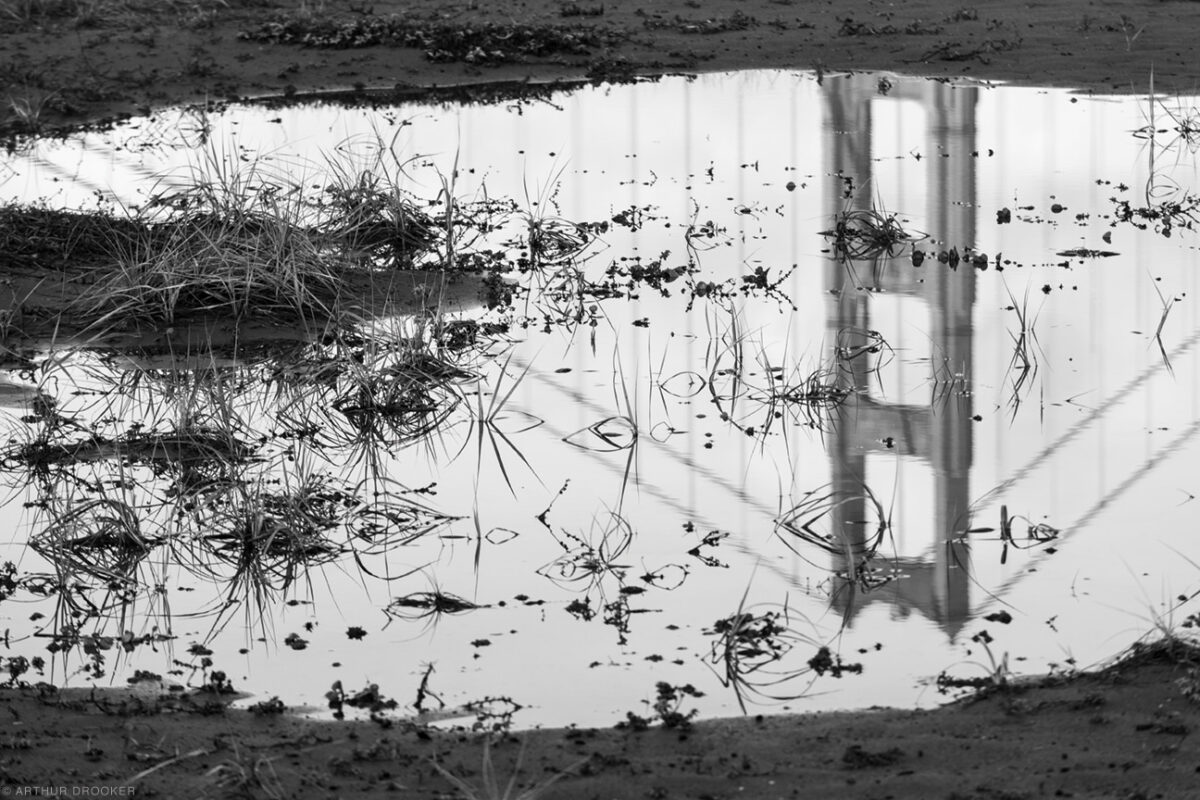
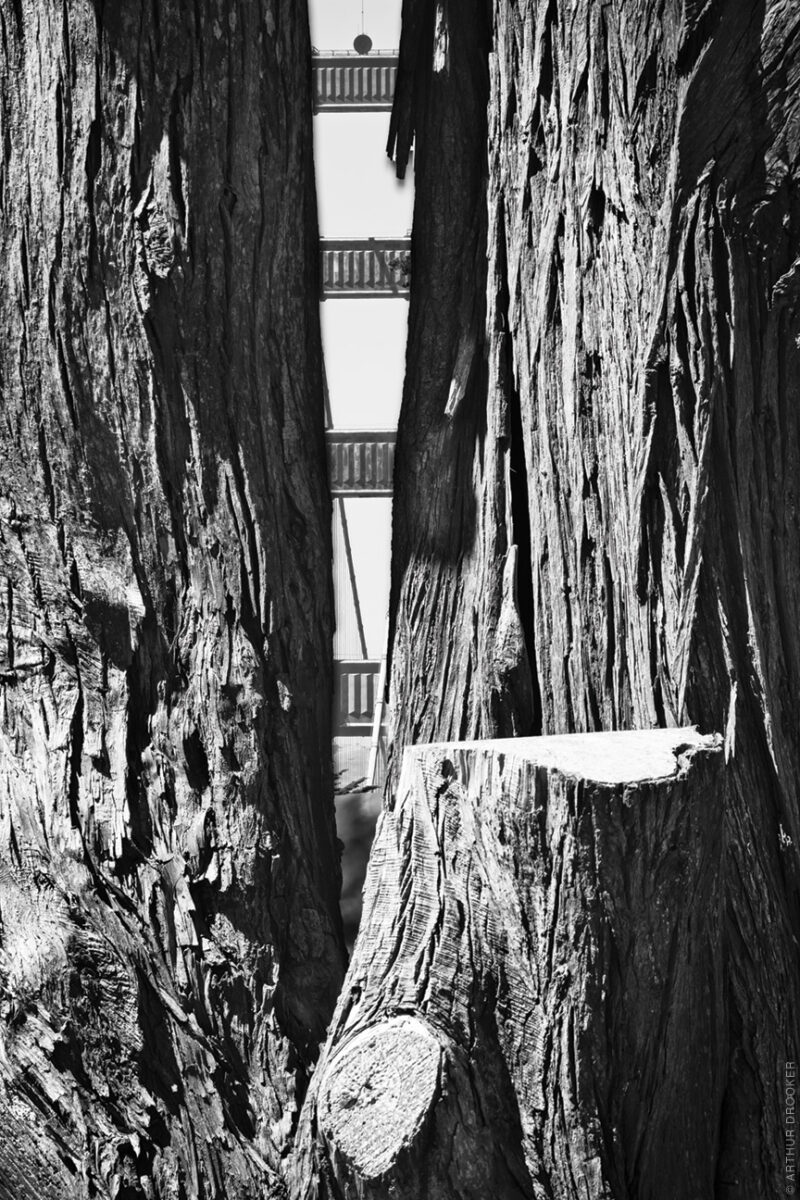
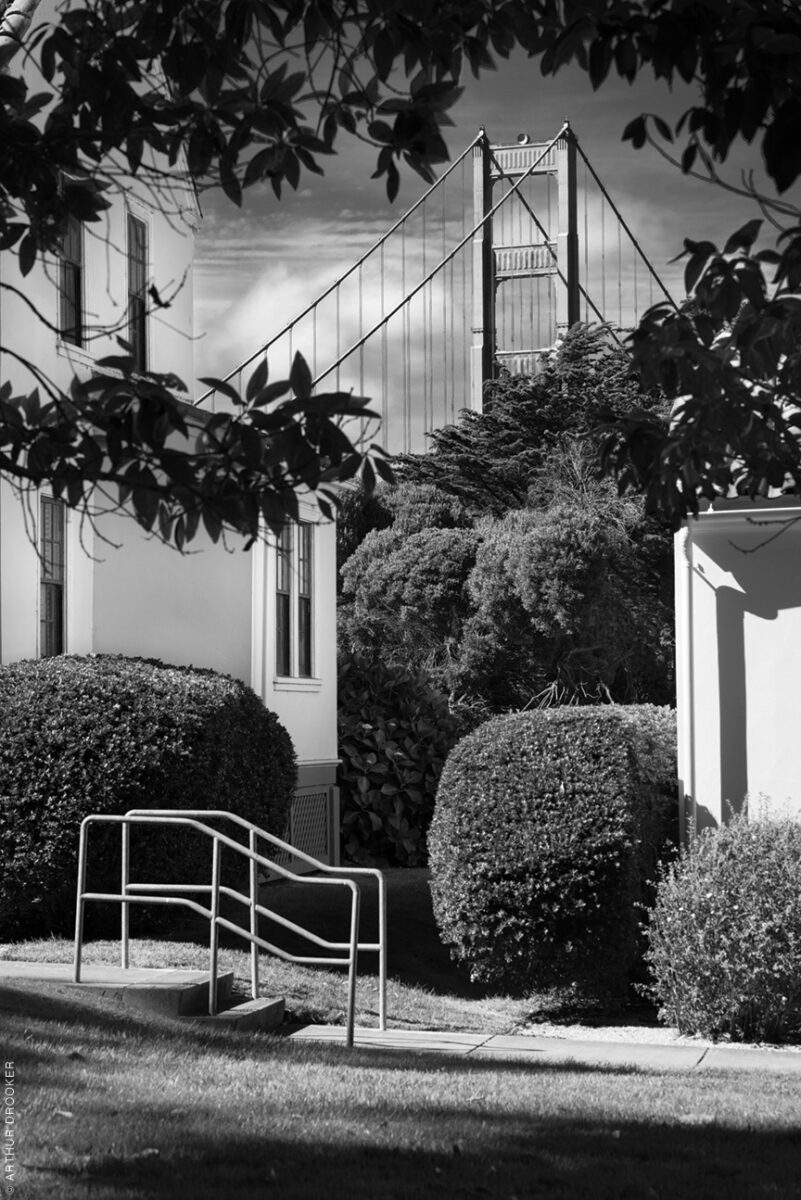
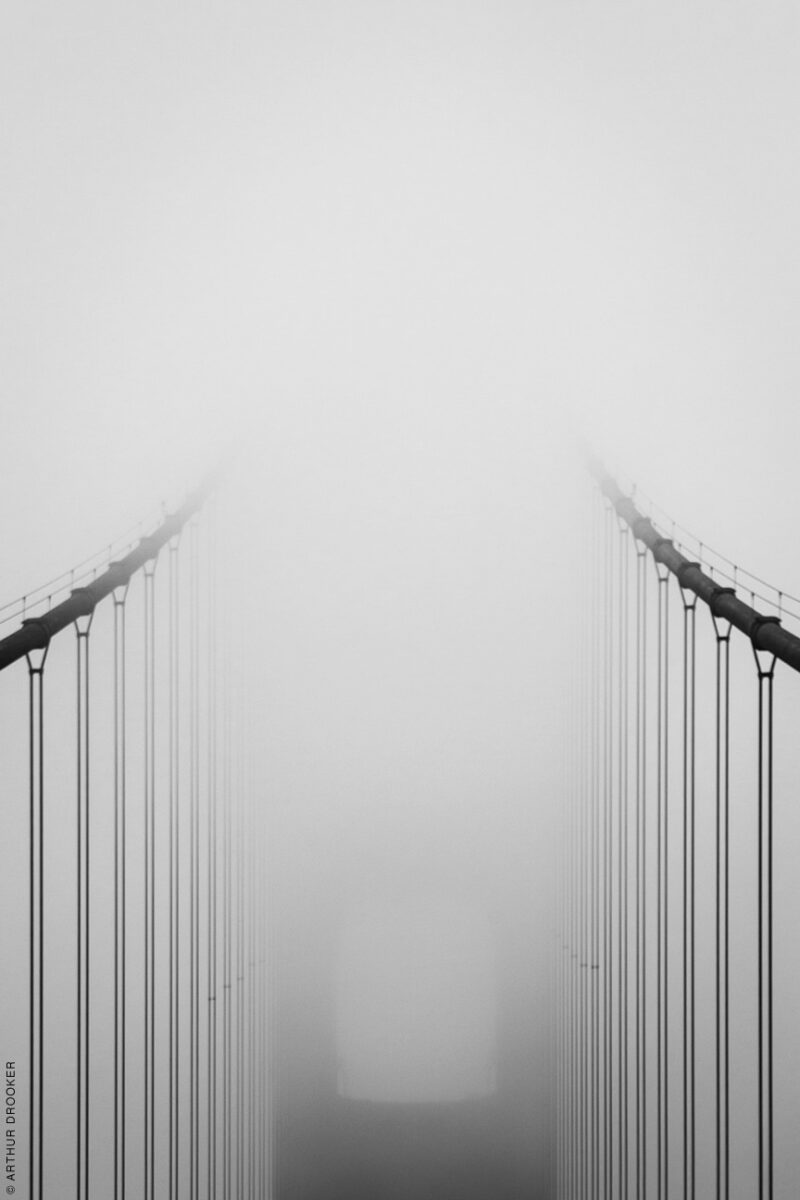
Calling the project “an exercise in seeing,” Drooker was determined to steer clear of “postcard shots.” He also shot in black and white “to emphasize the bridge’s fabled form” and sought out “unusual vantage points to place the bridge in context with its environment.” In addition to a variety of majestic and fog-shrouded views of the span, shots of the bridge’s underside, reflections in rain puddles, and views from Alcatraz and between grave markers at the San Franciso National Cemetery are included.
In a separate essay, Drooker pays tribute to Joseph Strauss, chief engineer, “biggest promoter,” and relentless driving force behind the herculean effort, extending from 1920 to 1937, to finance, design, and construct the Golden Gate Bridge. The book is also available in a deluxe edition, which includes a signed print and a piece of the bridge, salvaged when its original guard rails were replaced (arthurdrooker.com). Gazette editor John Prendergast emailed with Drooker in January about the project.
How did the inspiration from Hokusai’s Mount Fuji series develop? Were you looking for a subject that would lend itself to that kind of treatment—that is, did you start with Hokusai?—or did the idea start from wanting to photograph the Golden Gate Bridge and then coming to the analogy with the Mount Fuji series?
Soon after I began photographing the bridge, I realized it had the potential to become a book. I was already familiar with Hokusai’s Thirty-Six Views of Mount Fuji and began to see clear parallels between how he depicted the sacred mountain and how I was photographing the bridge—across different seasons, in varying weather conditions, and from perspectives both near and far. As a student of art history, the visual tradition that Hokusai established was something I wanted to engage with and carry forward.
You mention in the introduction that you photographed the bridge over two years. What was your process like? Did you try to go at different times of year or during the day? And what was the process like of whittling them down to 36 choices?
I live a short drive from the bridge, so I visited it frequently—from both sides, from beneath it (on a sailboat), and on it as well. Sometimes I carefully preplanned what I wanted to photograph; other times I explored freely, with no predetermined location in mind. Both approaches proved fruitful.
Over the two years I photographed the bridge intensively, I produced about a hundred images that felt worthy of a book. Selecting the 36 that ultimately made it in was challenging. Inevitably, you have to “kill a darling” or two, but I welcomed the discipline of making hard choices. Every photograph had to be memorable on its own and also work in sequence with the images before and after it. I was determined to create a propulsive visual flow that continually surprises the viewer.
How familiar with the Golden Gate Bridge were you before embarking on this project? You’re obviously a big admirer of Joseph Strauss. Did you know his story or learn about it through building the book?
I was familiar with the bridge before I began photographing it, but once the project was underway, I immersed myself in its history. I read extensively and watched several documentaries, and over time I became something of an expert. Joseph Strauss was the chief engineer, but more than that, he was the bridge’s greatest champion. Without his tireless efforts to promote the project—and without the talented engineers and architects he assembled—it’s doubtful the bridge would have turned out the way it did.
Sadly, Strauss died just a year after the Golden Gate Bridge opened.
For the deluxe edition, how did you learn about the salvaged guardrail pieces? How many copies of the deluxe edition have been made?
Last fall, I attended the annual arts festival in Mill Valley, where I live. While there, I came across a booth run by the owner of the Golden Gate Furniture Company. In 1993, he salvaged original bridge handrails that were being replaced. Since then, he has repurposed them into everything from keychains and pendants to coffee-table bases and picture frames. I bought a small H-shaped paperweight, and while holding it, it occurred to me that I could create a deluxe edition that included a signed copy of the book, a signed print, and an authentic piece of the bridge, all housed in a custom box. I had 20 deluxe editions made, and at the time of this writing, I’ve sold more than half of them. Collectors appreciate that they’re acquiring not only a book and a print, but also a genuine piece of history.
Finally, the photos certainly speak for themselves, but is there anything else you’d like to share about this project?
As I wrote in the introduction to the book, beyond its status as an architectural masterpiece and an engineering marvel, what resonates most deeply with me about the bridge is its power as a symbol of possibility. When critics claimed it was impossible to build the world’s tallest and longest span at the time over such a treacherous strait, Joseph Strauss replied, “Our world today revolves completely around things which at one time couldn’t be done because they were supposedly beyond the limits of human endeavor … don’t be afraid to dream.” I dedicated Thirty-Six Views of the Golden Gate Bridge to that spirit of possibility.