With prolonged exposures and paper negatives, Alicia Fowler meditates on the resilience of city trees.
Like many Penn undergraduates, Alicia Fowler W’09 loved strolling beneath the leafy branches that arc over Locust Walk. When she needed a break from her marketing and public policy coursework at Wharton, she sought respite under the cedars, cypresses, oaks, and elms that surround the BioPond at James G. Kaskey Memorial Park. That forest garden provided an escape from the pressure of academic life, a way to slow everything down.
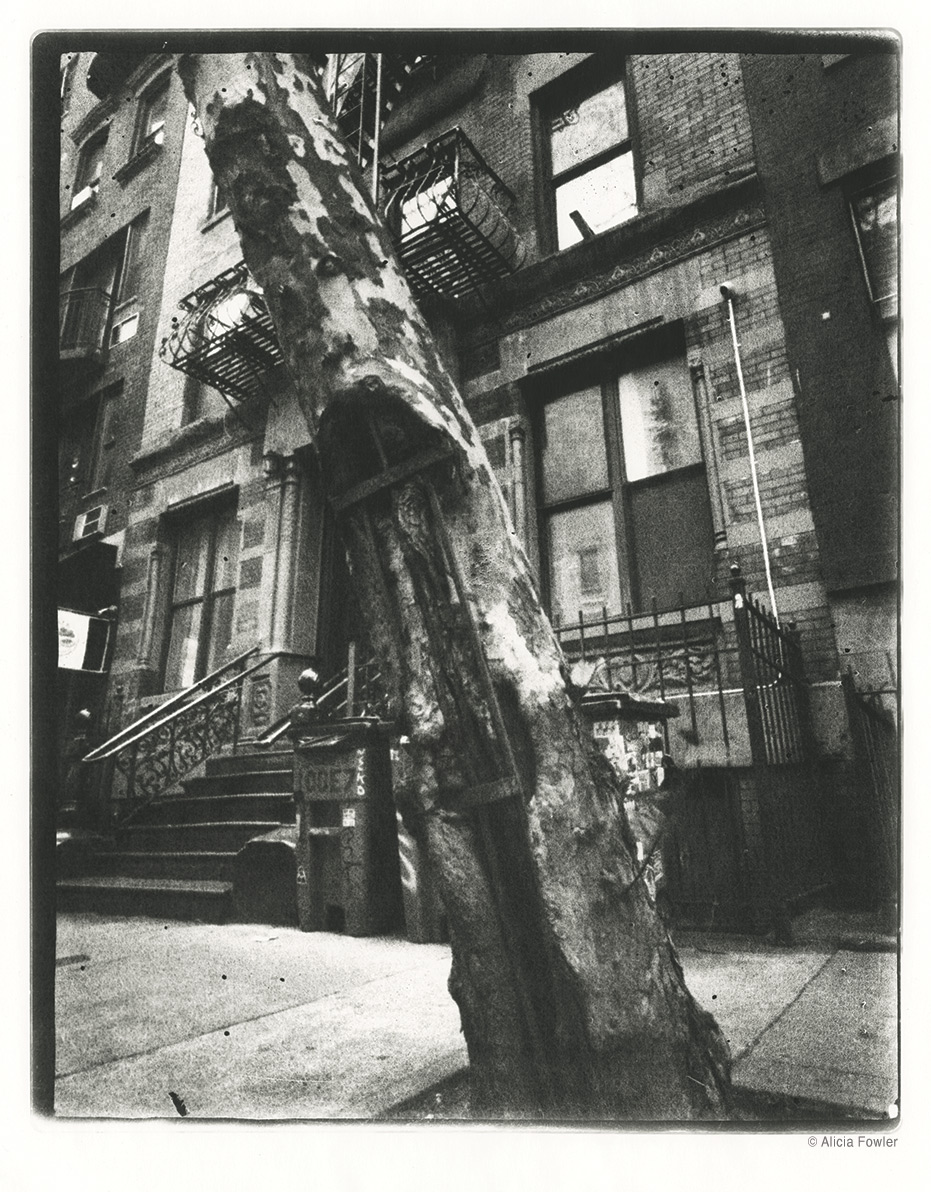
These days Fowler is a senior brand strategist for Google Cloud in New York. “I’m on a screen all day long at work,” she says, “and then on my phone all night.” The pace can be relentless. But over the last year or so, the East Village resident has rekindled her love affair with the urban canopy by looking up—and slowing way down—to commune with the trees in and around Tompkins Square Park. The 10.5-acre green space, which boasts a venerable collection of American elms, is her neighborhood idyll. Fowler has also come to love many of the sidewalk trees that shade the blocks nearby, often by triumphing over concrete, metal, and other obstacles that hem them in.
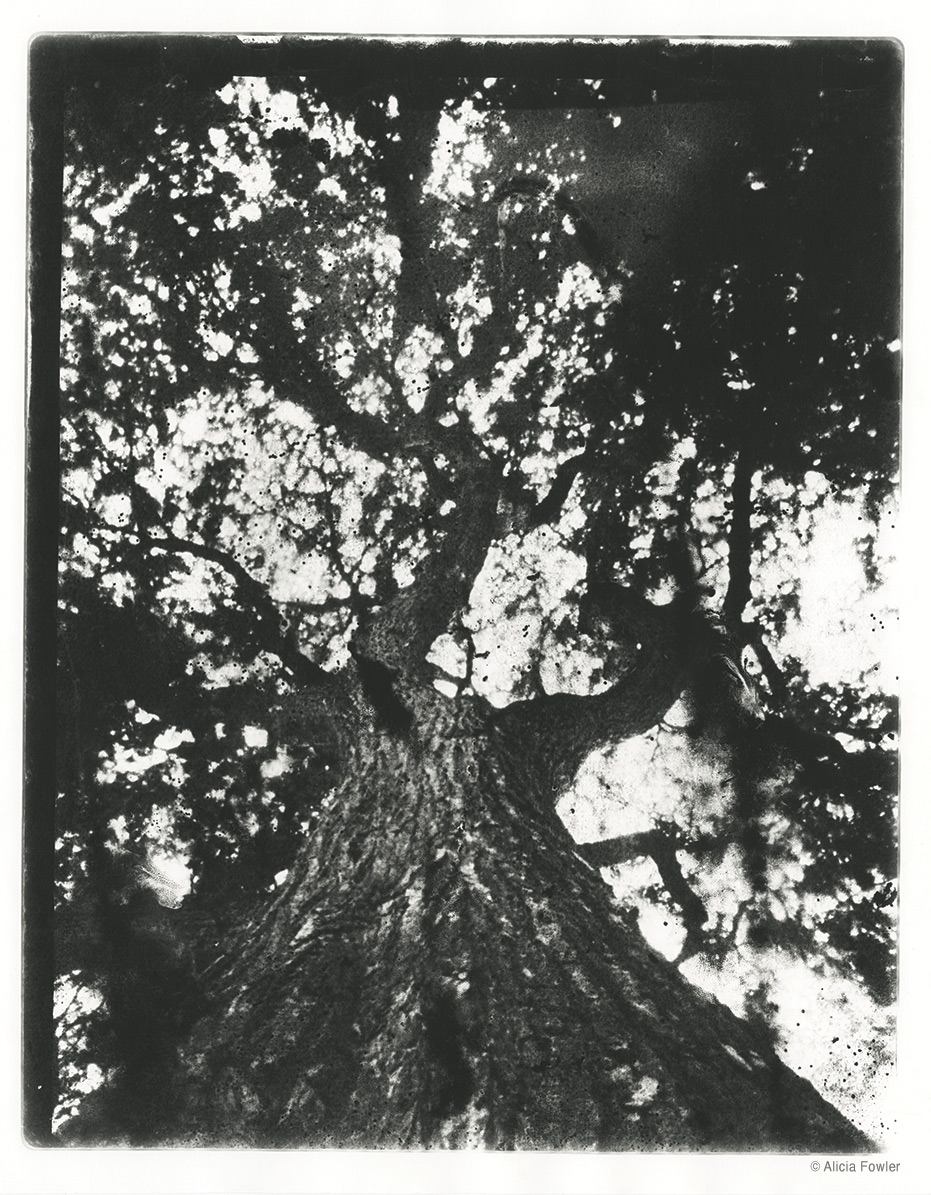
Fowler, who is a photographer in her off hours and serves as a teaching assistant at the International Center of Photography, has long been drawn to trees. But for her latest project she tightened her focus to a five-block radius centered on the park, and paid additional homage to her centenarian subjects by reaching back in time for a photographic process that’s older still—and that illuminates the little-known role of trees in the history of photography. Using a 4×5 pinhole camera and an equally old-fashioned vintage 4×5 press camera, Fowler created her black-and-white tree portraits by channeling ultra-long exposures—ranging from three minutes to an hour and a half—onto paper negatives made from mulberry trees.
Two years after the French inventor Louis Daguerre produced the first photographs in 1839, capturing images directly onto silvered sheets of copper, a Briton named William Henry Fox Talbot pioneered a method of creating negatives on chemical-coated paper, from which any number of positive images could then be printed. Although this innovation was swiftly replaced by glass negatives, which produced sharper images and remained the standard until the late-19th-century introduction of celluloid film, the paper negative “calotype” was the genesis of the negative-positive process that dominated photography until the digital age.
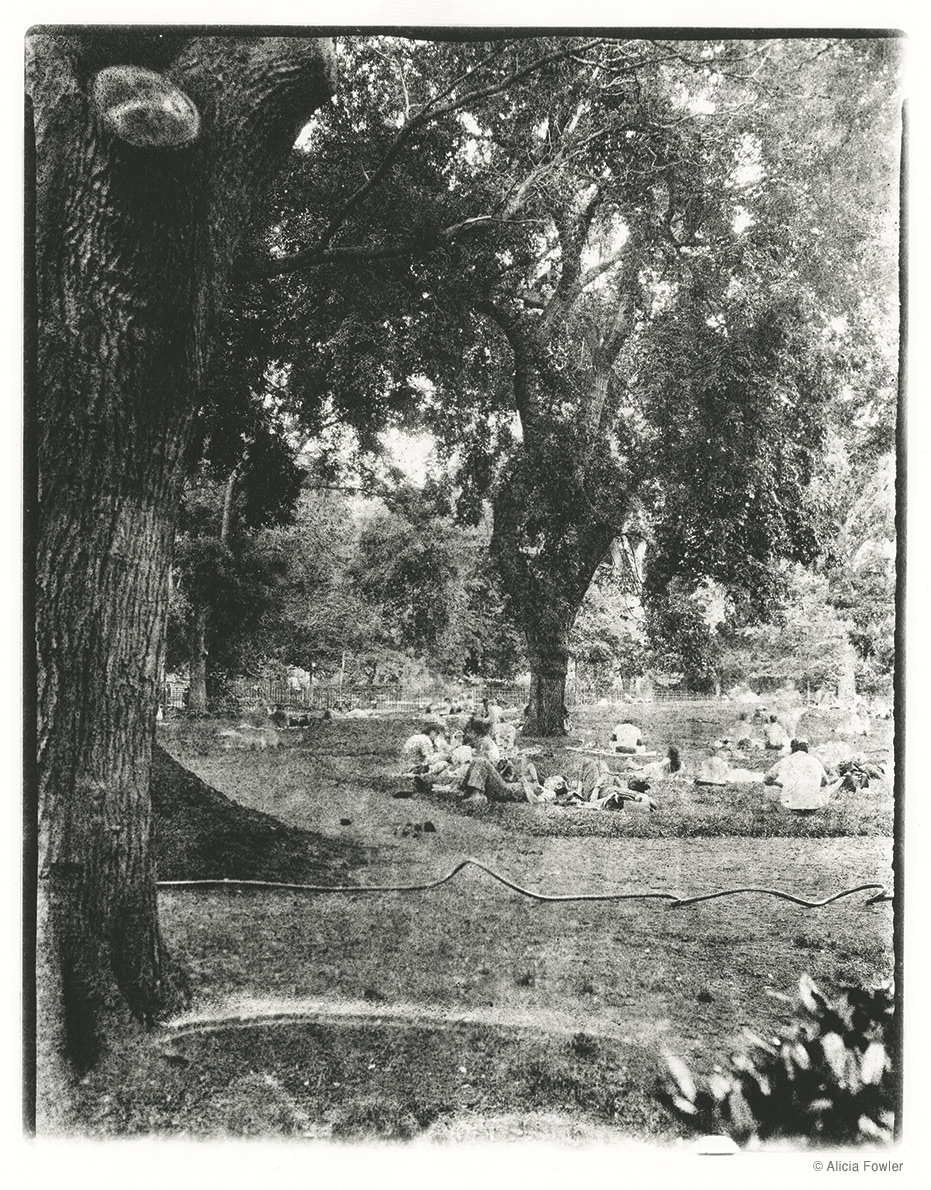
The digital age was exactly what Fowler sought to escape. “I really wanted a process that was almost antithetical to anything I did during my day job,” she says.
She got it. “Difficult to expose, fiddly to develop, and breathtakingly delicate once dry, these negatives have humbled me,” she reflects. Not that it was any easier when the negatives were still wet in the darkroom. “It’s kind of like dealing with a wet paper towel. You just have to be a lot more careful. You really have to be present in the moment.”
Her atmospheric images, printed on 16-by-20-inch warmtone paper and exhibited over the summer at Ninth Street Espresso—her local coffeeshop, one block east of Tompkins Square Park—also revisit several specimens photographed in the 1990s by the American artist Zoe Leonard, who was also drawn to urban trees, especially sidewalk trees straining against and sometimes engulfing ornamental fences and other barriers to their growth. (Leonard, coincidentally, is the 2026–2027 Keith L. and Katherine S. Sachs Visiting Professor at the Weitzman School of Design this academic year.)
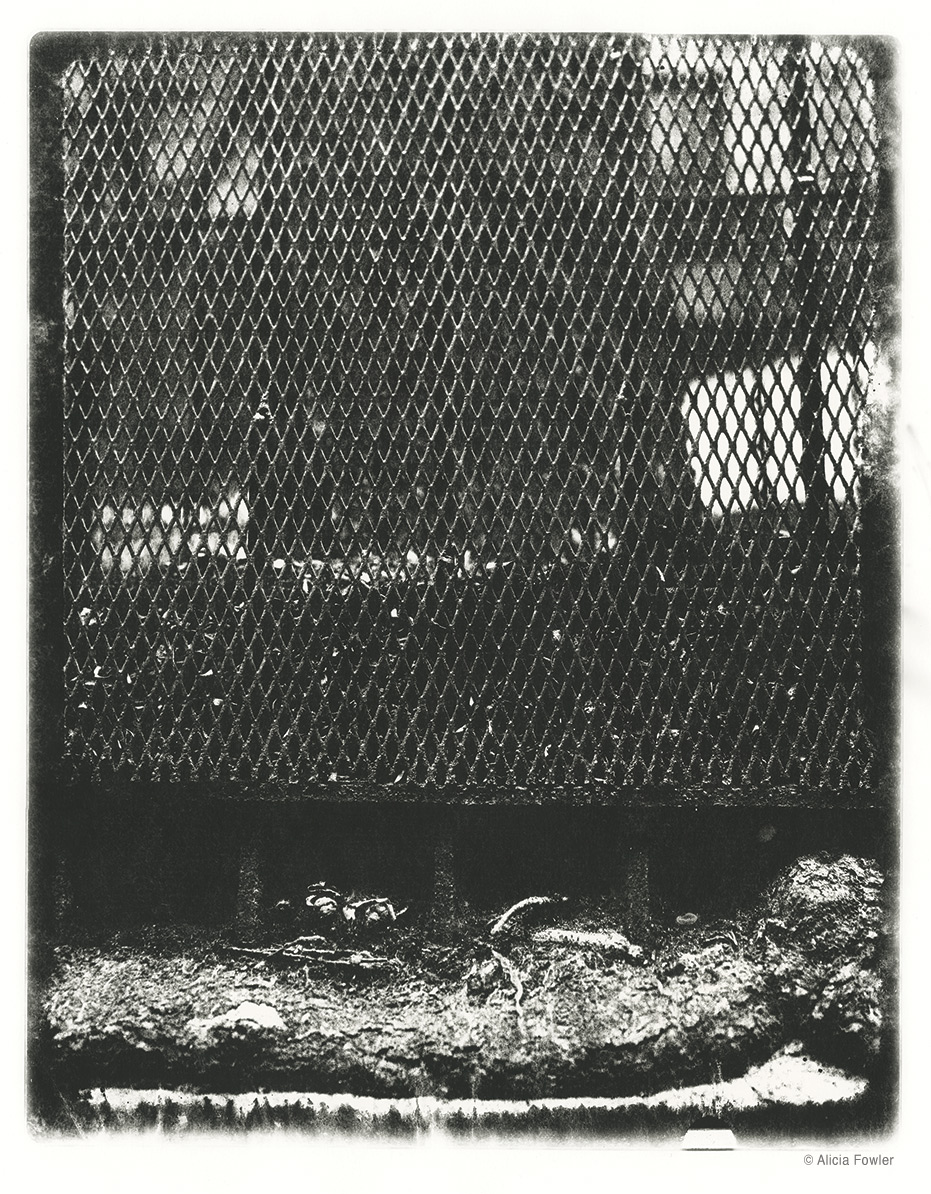
Fowler embraced the idiosyncrasies inherent in the arcane technique she chose. “From coating mistakes to the visible fibers of the washi paper negatives, each print carries scars, not unlike the trees they represent,” she wrote in a project description.
“I was just trying to get away from that sense of a perfect negative, a perfect print,” she says. The Tompkins Trees series “still felt like photographs, but something was a just a little different. There was a softness and romanticism to them.” From the ultralong exposures, to the painstaking darkroom work, to the documentation of another 30 years of growth since Leonard snapped some of these gnarled trunks and limbs, “this felt like I was operating on tree time.” —TP