Well over a century since it was first identified and following decades of intensive research, Alzheimer’s disease continues to withhold its essential secrets and a cure remains elusive. But recent drug treatments, improvements in diagnostic techniques, and other developments constitute what one Penn Medicine leader calls the “dawn of a new era” in confronting its impacts on patients and caregivers.
By Mary Ann Meyers
Download a PDF of this article
Basic neuroscience undertaken to understand how the human brain works, including the molecular and cellular underpinnings of learning and memory, has led over the course of some four decades to drugs that are slowing the progression of the world’s leading cause of dementia—Alzheimer’s disease. “It is the dawn of a new era,” says David Wolk, professor of neurology in the Perelman School of Medicine, codirector of the Penn Memory Center, and director of Penn’s Alzheimer’s Disease Research Center. “We have reached a critical level of maturity in understanding a widespread pathology that will become even more common in developed nations like ours experiencing significant increases in aging populations.”
In the United States, some 7 million people—11 percent of the 65-and-older population—are afflicted with variants of the disease. It causes about two-thirds of the estimated 57.4 million dementia cases worldwide. While lifestyle changes that emphasize exercise, a healthy diet, and social engagement may have cognitive benefits for older people, it is unclear whether they influence the underlying pathology of Alzheimer’s.But bench research dating from the 1980s and followed recently by clinical trials at Penn Medicine have led to the availability of drugs with modest benefits. Lecanemab (Leqembi), along with the even newer donanemab (Kisunla), appear to slow cognitive decline in the early stages of Alzheimer’s even as scientists continue to search for a cure that has so far eluded them.
The insidiousness of Alzheimer’s—its gradual onset over a period of months or years until problems with cognition interfere with function to the extent that family and friends notice a loved one’s lapses in memory, changes in mood, and/or difficulty in carrying out once easily performed tasks—often delays diagnosis. Since the identification of the disease as a distinct pathology in 1906, moreover, debate has swirled over its definition. In addition to patterns of behavior setting Alzheimer’s apart from normal aging, brain anomalies characteristic of the condition can now be detected in living persons by means of biological molecules found in body fluids.
These changes in neural structure were discovered on autopsy by the psychiatrist and neuropathologist Alois Alzheimer when examining the brain of a woman who had exhibited loss of her short-term memory before dying at 51 years of age. He noted extracellular deposits of what we now know are amyloid beta protein plaques and diffuse neurofibrillary tangles inside neurons, which were subsequently shown to be twisted filaments of a protein called tau. The disorder was named when his mentor and colleague in Munich, Emil Kraepelin, updated his textbook, Clinical Psychiatry, in 1910. Kraepelin defined Alzheimer’s as early-onset dementia despite similar neuropathological features to senile dementia, which Czech psychiatrist and neuropathologist Oskar Fischer found on autopsy in a large sample of cases. But then World War I disrupted research in German-speaking countries, Alzheimer died in 1915, and Fischer shifted the focus of his investigations until his own death in a way station to a Nazi concentration camp during World War II.
The hiatus in Alzheimer’s research was not only a consequence of geopolitics but also of the dearth of imaging technology. High-resolution electron microscopes were not developed until the 1940s. The studies they made possible in the 1960s, notably in the Bronx and in Newcastle, England, of neuropathological changes in the brains of people under 65 who had been diagnosed with Alzheimer’s before their deaths and in the brains of older people with dementia led neurologist Robert Katzman to declare that the two conditions should be considered a single disease. His 1976 editorial in the Archives of Neurology, “The prevalence and malignancy of Alzheimer disease: a major killer,” redefined Alzheimer’s as a major public health problem.
Soon thereafter the families of afflicted individuals formed a national patient advocacy group, now known as the Alzheimer’s Association; and the newly established National Institute on Aging (NIA), an agency of the National Institutes of Health (NIH), adopted the disease as its inaugural focus. In 1982, President Ronald Reagan charged the Department of Health and Human Services with creating a task force to coordinate Alzheimer’s disease research. It was five years after he left office in 1989 that the president, then 83, announced his own diagnosis, and his son has suggested that Reagan may have shown signs of Alzheimer’s during his presidency. Whenever the onset, the President’s disclosure pointed poignantly to the course of the disease experienced by many sufferers: “I now begin the journey that will lead me into the sunset of my life.”
It was during Reagan’s first term that Virginia Man-Yee Lee, a biochemist and cell biologist, and her late husband, John Q. Trojanowski GM’80, a neuropathologist and neuroanatomist, undertook research to decipher the building blocks and unmask the molecular aspects of neurodegenerative diseases. They had joined Penn’s medical school faculty in 1981 and remained at the center of Penn research on the disease for decades [“Untangling Alzheimer’s,” Mar|Apr 2011].
Lee, the John H. Ware 3rd Endowed Professor in Alzheimer’s Research, credits the pair’s “complementary expertise and skill sets” for their pathbreaking discovery: the mechanics by which a distortion of the biochemical processes governing cell-to-cell communication leads to deposits of misfolded tau protein in the brain—a dynamic that they demonstrated plays a key role, along with earlier occurring amyloid plaques, in the progression of Alzheimer’s. The couple also discovered other proteins— notably alpha-synuclein (found in Lewy body dementia and Parkinson’s disease) and TPD-43 (found in frontotemporal lobar degeneration and amyotrophic lateral sclerosis)—that they showed, through the creation of innovative animal and cell models, were central players in related neurodegenerative disorders.
Their evolving research program was among the first of its kind in the United States to receive federal funding—monies that made possible the recruitment and training of a whole generation of scientists. Through the years, Penn’s Center for Neurodegenerative Disease Research, which the couple founded and Lee has continued to direct since Trojanowski’s death in 2022 [“Obituaries,” May|Jun 2022], played a major role in helping to identify targets for potential drug therapies. Studies conducted under its auspices, moreover, have led to the development of biomarkers of the conditions that progressively damage and destroy nerve cells in the brain and spinal cord, resulting in a decline in cognitive and motor functions.
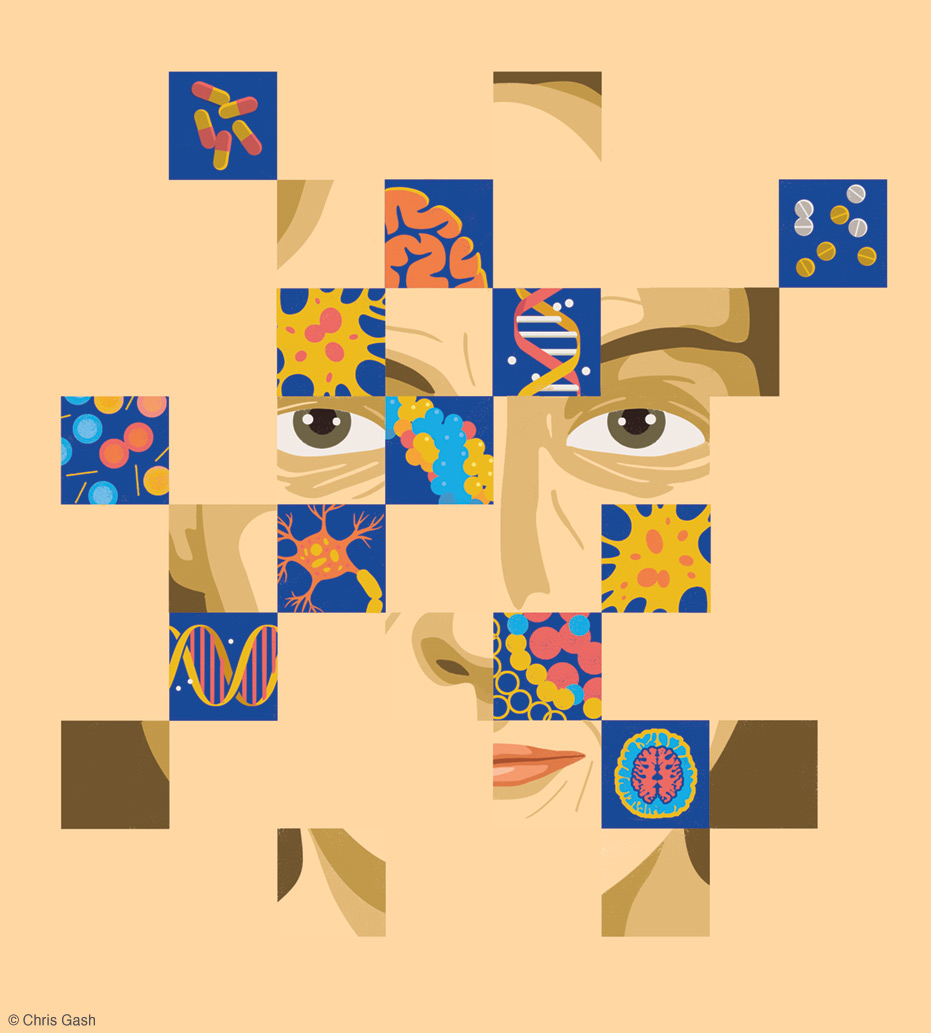
In his clinical practice, Jason Karlawish GM’99, professor of medicine, medical ethics and health policy, and neurology who codirects the Penn Memory Center with Wolk, finds most patients ask the same question: “What’s the cause of my problem?” His job, he says, “is to help people to understand why they are experiencing cognitive symptoms” and, in doing so, “give them time to plan ahead.” Clinical assessment measures like behavioral testing play a role. So does noninvasive magnetic resonance imaging (MRI), which can suggest “probable Alzheimer’s” by detecting structural changes in the brain, and positron emission tomography (PET) brain scans, which can help identify biomarkers indicative of the earliest transition to Alzheimer’s disease. It was a Penn medical scientist, the late Christopher Clark—founding director of the center and an associate professor of neurology at the Perelman School of Medicine from 1990 to 2007—who upon becoming the medical director for AVID Radiopharmaceuticals led the investigative team that demonstrated the ability of florbetapir PET scans to detect brain deposits of amyloid beta.
Clinicians can also use spinal taps to look for amyloid and tau pathology in cerebrospinal fluid. Recently, moreover, Penn researchers and others have helped validate a new test that detects a specific form of tau, along with amyloid, in blood plasma, which can indicate the presence (or absence) of amyloid plaques in the brain—and correlates with the clinical stages of Alzheimer’s disease.
“It’s a very exciting development,” says Lee, “because taking and testing a blood sample is neither invasive nor expensive. As far as we know now, current Alzheimer’s drugs are most effective in early stages of the disease,” she continues, “so having an easy, reliable, and cheap way to gauge how far Alzheimer’s has progressed could help doctors determine which patients are likely to benefit from treatment. But what we need to discover,” she adds, “is whether tau tangles are affected by drugs now in use that target amyloid plaques since, unfortunately, we don’t yethave any pharmaceutical products directed at tau that are able to cross the blood-brain barrier.”
Even with the increasing accuracy of tests, the clinical diagnosis of Alzheimer’s can be a fussy matter of gradation. How advanced is the disease? Finding out begins in a doctor’s office. Karlawish typically talks first with a patient’s spouse or an adult child, then with the patient, and concludes with a three-part conversation. To discover if patients are aware of changes in their mental functioning, he “routinely asks a question taken from philosophical inquiries into consciousness: What is it like to be you?” Karlawish often hears about memory gaps, temporal confusion, and struggles to navigate routes that were once familiar. If a clinical assessment suggests the usefulness of other diagnostic tests, he explains the options.
“Some people are very information-seeking,” Karlawish observes. If test results show definitive evidence of Alzheimer’s, he tries to deliver the news to respect what the patient knows and wants to know. “There are patients for whom knowledge is power,” he says, “and there are others who react quite differently to their diagnosis. Learning they have a condition that is as stigmatizing as Alzheimer’s only escalates their anxiety.” But he conveys what he knows is “emotionally fraught information” as kindly as he can. “I wait,” he says, then “I ask the patient how he/she is feeling. I listen to their concerns. When they are ready, I discuss staging—how they can expect their disease to force changes in their lives—and options for treatment.” Karlawish, who has written a book about Alzheimer’s [“The Humanist Is In,” Mar|Apr 2021], believes “agency is a fundamental characteristic of what it means to be human,” and he tries not to rob his patients of it—even though the disease almost surely will.
Yet there is hope. David Wolk is excited about drugs that might change the trajectory of decline. Penn was involved in trials for a promising candidate called aducanumab beginning in 2015. It was a monoclonal antibody aimed at removing excessive beta amyloid before it formed plaques, and when tested in patients in the earliest stages of Alzheimer’s, it was the first therapy shown to reduce the clinical symptoms of the disease. Biogen, the Cambridge, Massachusetts-based company that produced the drug, sought FDA approval to market it in 2019, and the government agency granted accelerated approval in 2021. But the expedited process generated a backlash from critics who maintained that there wasn’t conclusive evidence of the drug’s efficacy in large part because these trials were discontinued early based on initial concern that they were ineffective. The FDA mandated that Biogen confirm its positive results in a new trial to qualify for full approval. In 2022, Medicare ruled it would only cover patients enrolled in a clinical trial. With sales of the costly Aduhelm (aducanumab’s brand name) sluggish, Biogen announced in early 2024 that it was discontinuing the product to concentrate on another promising monoclonal antibody, lecanemab.
In 2022, Biogen and Tokyo-based Eisai had announced that a Phase 3 clinical trial of lecanemab (Leqembi) slowed cognitive decline by 27 percent over 18 months. Wolk says he was encouraged that the drug could produce “meaningful differences in function for a significant portion of patients.” Edward Lee Gr’04 M’05, associate director of the Alzheimer’s Disease Research Center and an associate professor of pathology and laboratory medicine at Perelman, dared to hope that the research community had “moved the needle.” In July of 2023, the FDA gave its full approval to lecanemab. The drug, administered by intravenous infusion every other week, bought time—about five months, a meaningful period for patients awaiting a grandchild, writing a book, or planning a holiday—before sufferers from Alzheimer’s began developing more severe symptoms.
Meanwhile, Penn Medicine was conducting trials on a similar drug, donanemab (Kinsunla). Approved by the FDA in July of 2024, it requires monthly infusions, and like the other monoclonal antibodies targets and clears beta-amyloid. It was shown to slow cognitive decline by 35 percent over the course of a year and a half. Wolk and his colleagues think it may be possible for patients to stop taking the drug once plaques are cleared away. If more data confirms his hypothesis, that might mitigate the known risk of lecanemab and donanemab causing amyloid-related imaging abnormalities (ARIA) such as microscopic brain bleeds, which occurred in about a quarter of the trial’s participants. No one knows for sure why ARIA are triggered by the drugs, but scientists suspect they may stem from the antibodies doing their job well—that is, removing amyloids from the walls of blood vessels in the brain and rendering them prone to break. And, most importantly, as Karlawish observed, “no one can say with certainty what happens after 18 months. The big question, to which we hope to find an answer, is: Will the benefits continue?”
Meanwhile, a multidisciplinary team of scientists led by Kurt Brunden, research professor of pathology and laboratory medicine at Perelman, has been awarded a $6.9 million grant from the National Institute on Aging to prepare a potential disease-modifying Alzheimer’s treatment that targets tau. With colleagues at the University of California, San Diego, School of Pharmacy, Burden had developed a new compound, called CNDR-51997, and found it was effective in restoring brain health in mouse models of Alzheimer’s. The new grant will help the researchers assess the drug’s safety in formal studies required by the FDA prior to the initiation of human testing.
Wolk calls these latest pharmaceutical interventions an “inflection point in the treatment of a dread disease.” He considers lecanemab and donanemab “pretty safe when carefully monitored, though the risk is not zero.” Adverse side effects are typically limited and reversible, though some patients had to be hospitalized with severe headaches, convulsions, and temporary vision loss. No deaths from taking either drug have occurred at the Memory Center, and Wolk is currently leading a monitoring study to see who should avoid the two drugs and who benefits the most from taking them. He stressed that in trials at Penn and elsewhere, they were tested on people whose symptoms were mild. If the drugs were given when a person with Alzheimer’s had no observable cognitive impairment, he says, the newly developed monoclonal antibodies “may delay onset.”

People with a familial history of dementia could be ideal candidates. It was discovered in 1993 that carriers of a gene variant known as APOE4 have a high probability of developing Alzheimer’s. Those with two copies of the APOE4 allele constitute 2 to 3 percent of the general population but 15 to 20 percent of Alzheimer’s patients. A 2024 study concluded that almost all of these people go on to develop the disease, with biological markers apparent by age 55—two decades earlier than they are typically seen in patients with one copy of the allele. Wolk points out, moreover, that scientists have identified some 80 other genetic risk factors for Alzheimer’s. His Perelman colleague Gerard Schellenberg, professor of neuropathology and laboratory medicine and director of the Neurodegeneration Genomics Center, was instrumental in discovering genes implicated in the early onset of the disease, and his ongoing research continues to fill in the genetic landscape of Alzheimer’s.
Gene editing to transform APOE4 into a protective allele is a distant possibility, but one under exploration. Michael Haney is an assistant professor of pathology and laboratory medicine at the Perelman School of Medicine. Since joining the faculty in 2024, he has been using the revolutionary CRISPR ‘genetic scissors’ technology to try to reverse this genetic progression of Alzheimer’s in mice. “We still need a better understanding of the biochemistry of the disease,” he says, but “my lab is hoping to establish proof of the concept that modifying the APOE gene sequence to have protective variants in the immune cells of the brain will prevent some of the disease pathology.”
Haney is collaborating with Frederick Christian (“Chris”) Bennett, who came to Penn as an assistant professor of psychiatry in 2019. Bennett discovered that in mouse models, bone marrow–derived stem cells can replace faltering immune stem cells of the brain—a finding that could one day lead to new treatments for neurodegenerative diseases. As Haney notes, “replacing these brain immune cells with ones that have protective versions of the APOE gene edited by CRISPR may provide some protection against Alzheimer’s by delaying by years the onset of the disease in genetically at-risk populations.” Although it remains in early stages, this work is another cause for hope.
Meanwhile, other researchers are investigating the factors that affect patients’ willingness to try newly developed therapies like lecanemab and donanemab. Medical anthropologist Justin Clapp Gr’12 GM’17, an assistant professor of medical ethics and health policy at Perelman, is currently interviewing a cohort of about 20 patient-caregiver dyads who have been considering infusions of one of the monoclonal antibodies. All the patients have been diagnosed as having the early stages of Alzheimer’s. Clapp says that about two-thirds of them have opted to take the drug offered to them while one-third have declined for a variety of reasons, including concern about side effects, skepticism about benefit, the burdensome nature of infusions, and difficulties discussing the possibility of treatment.
The burden of decision-making only serves to emphasize the enormous weight a diagnosis of Alzheimer’s places on families. The disease breeds loneliness not just for patients but for those responsible for their care. At the Penn Memory Center, Alison Lynn SPP’16, the director of social work, has led support groups for dementia caregivers for the past decade. “I have encountered almost every imaginable emotion from guilt, grief, depression, anger, and a deep sense of futility to astonishing resilience, dedication, love, and a capacity to keep giving beyond any capacity caregivers thought they possessed,” she says. “Over the years, I have formed deep and lasting relationships with our families.” Lynn reflects one of the most helpful things she does for many patients is “normalizing the shame they experience over negative feelings. I tell them their reactions are ones I have come across, over and over again.” She describes “an ambiguous sense of loss with no ritual of closure—no wake, no sitting shiva, no funeral—for someone who looks the same but whose personality has changed to the extent that their spirit almost seems to have departed. It is never, ever easy,” she says, “when your spouse or parent or friend no longer recognizes you.”
But sometimes there are unexpected moments of communication and connection. They are often referred to as “paradoxical moments of lucidity,” though Jason Karlawish, who led a study of these so-called ‘blips’ in long downward journeys, objects to the adjective, noting that such occurrences “are part of the dementia experience even in advanced stages of Alzheimer’s.” However brief, he encourages caregivers to cherish them. When the light fades from patients’ eyes and stares become vacant, Lynn sometimes suggests that families light a candle, say a prayer, or gather with friends to reflect on good times shared with their loved one.
A peer mentorship program she started last year pairs longtime caregivers with newer caregivers. She tries to foster a degree of normalcy for the caregivers and more able patients with monthly cafés that involve outdoor events, like bird watching, or attending musical and dance performances especially arranged for them. Engaging in such activities without fear of stigma can be a potent form of therapy in its own right. Indeed, Karlawish has noted that “mind isn’t simply in the brain and dementia isn’t simply the consequence of damage to the brain. Mind emerges from an interaction between the brain and the world around it.”
The world experienced by people with Alzheimer’s is, of course, largely shaped by their caregivers. Karlawish and a colleague, Emily Largent Nu’06, the Emanuel and Robert Hart Associate Professor of Medical Ethics and Health Policy and the chief of the Division of Medical Ethics at Perelman, have studied the dignity of caregiving and the critical role caregivers play in the mental lives of people living with dementia. In an article in the American Journal of Bioethics, they and coauthor Andrew Peterson called the job “mind care,” a term meant to highlight how wrong society is to undervalue it. Chief among the “enduring obstacles to providing good care to persons living with dementia,” they have written, “is an impoverished conception of caregiving and a failure to recognize its moral importance.” They argue that a key and “generally overlooked feature of dementia caregiving is shoring up impairments in cognition, buttressing identity, and advocating for the [afflicted] person’s’ agency.”
The needs of caregivers have long been the focus of research conducted by Nancy Hodgson GNu’88 Gr’99, the Claire M. Fagin Leadership Professor of Nursing who chairs the nursing school’s biobehavioral health department. Last spring she received a pilot award from the Penn Artificial Intelligence and Technology Collaborative for Healthy Aging to study the use of natural language processing (NLP) to analyze recorded conversation with the caregivers of dementia patients. Her objective is to see if NLP, a combination of computer science, linguistics, and AI, can help clinicians detect depression and burden felt by those who are caring for Alzheimer’s patients even when they don’t explicitly share their feelings.
Hodgson is also the coleader of a group of scholars forming a new center, funded by a $5.8 million grant from the NIA, that aims “to bring research findings from the science of caregiving into the real world of people living with dementia,” she says. Involving Penn Nursing, the School of Public Health at the University of Minnesota, the University of Wisconsin, and Drexel University College of Nursing and Health Professions, the center goes by the acronym EMBRACE (Establishing Mechanisms of Benefit to Reenforce the Alzheimer’s Care Experience) and has already awarded two of a projected six grants to applicants who will develop, test, and implement behavioral intervention studies in home and community-based dementia care. Hodgson noted that “the proposals it funds will ask why and how a particular intervention leads to a specific result, with the goal of creating practical, scalable solutions to maximize benefits to sufferers from Alzheimer’s and those who care for them.”
After more than two decades as a neurologist, David Wolk has become convinced that Alzheimer’s is “extremely heterogeneous.” The finding that Alzheimer’s often coexists with other neurodegenerative diseases, notably Lewy body dementia, cerebrovascular dementia, frontotemporal lobar degeneration (FTLD), and TDP-43 pathologies among others, contributes to the challenge of diagnosing and treating it. As the leader of an international team of researchers, Wolk recently made significant contributions to understanding an underrecognized pathology called LATE (limbic-predominant age-related TDP-43 encephalopathy), a common mimic of Alzheimer’s that frequently occurs with it, influencing the disease’s course and potential response to therapy. “My hope,” he says, is that “unravelling the clinico-pathologic heterogeneity of the Alzheimer’s spectrum will provide a basis for implementing precision medicine approaches to treatment.”
Another discovery that exemplifies the progress being made in understanding the range of related conditions is Edward Lee’s finding of a novel mutation in the VCP (Valosin-containing protein) gene in an autopsied brain. Using cellular and mouse models, Lee proved that the VCP mutation was associated with the tangling of the tau protein. “We think it impairs the protein’s normal ability to break apart the clumps,” he says. What Lee has learned suggests a possible new therapeutic target for treating Alzheimer’s.
But the reality is that dementia cases often aren’t cut-and-dried. Progress in diagnostic science, aided by imaging technologies that have been deployed for detecting amyloid since the early 2000s and more recently for spotting tau, spinal taps in use for measuring amyloid and tau levels in CSF since 2018, and even newer blood tests, has greatly increased the ability of clinicians to determine the degree of loss of nerve cells in the brain. On the horizon is retinal imaging, a potential tool being investigated by Benjamin Kim, associate professor of ophthalmology at Perelman, who has identified abnormalities on the retina that are potential biomarkers of forms of FTLD and Alzheimer’s.
“Penn has an exceptional pipeline from research to clinical trials,” Edward Lee says. As the search goes on to refine and expand our knowledge of Alzheimer’s, however, it is sobering to contemplate that scientists still can’t agree on what causes the disease, much less how to defeat it. But their hope for a means of delaying onset has come fast on the heels of medicines to slow Alzheimer’s progression. Science, supported by universities and governments and ultimately donors and citizens, has gone a long way in just the past few decades to unmask a monster its practitioners aim to defang. The staff of the Penn Memory Center wants to help patients age well, preserving autonomy as long as possible and dignity until life ends.
Mary Ann Meyers Gr’76, former secretary of the University, president of the Annenberg Foundation, and senior fellow at the John Templeton Foundation, is the author of Art, Education, and African American Culture: Albert Barnes and the Science of Philanthropy (2004 and 2006), among other works.