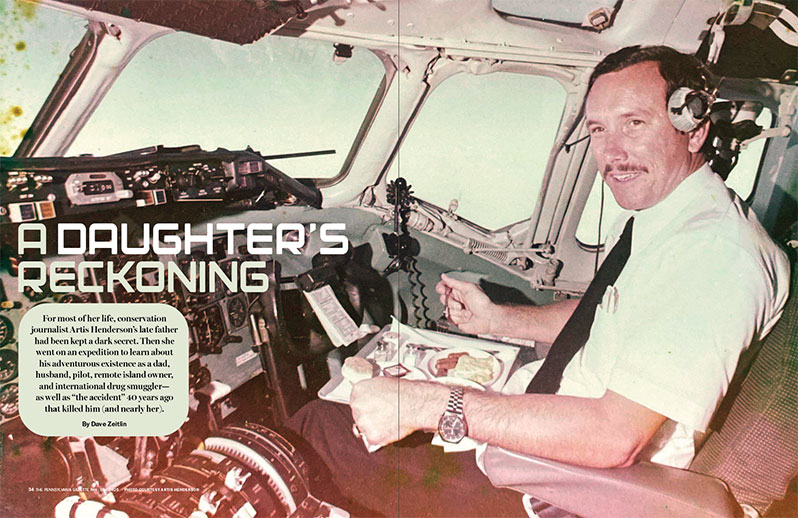
For most of her life, conservation journalist Artis Henderson C’02 W’02’s late father had been kept a dark secret. Then she went on an expedition to learn about his adventurous existence as a dad, husband, pilot, remote island owner, and international drug smuggler—as well as “the accident” 40 years ago that killed him (and nearly her).
By Dave Zeitlin
Download a PDF of this article
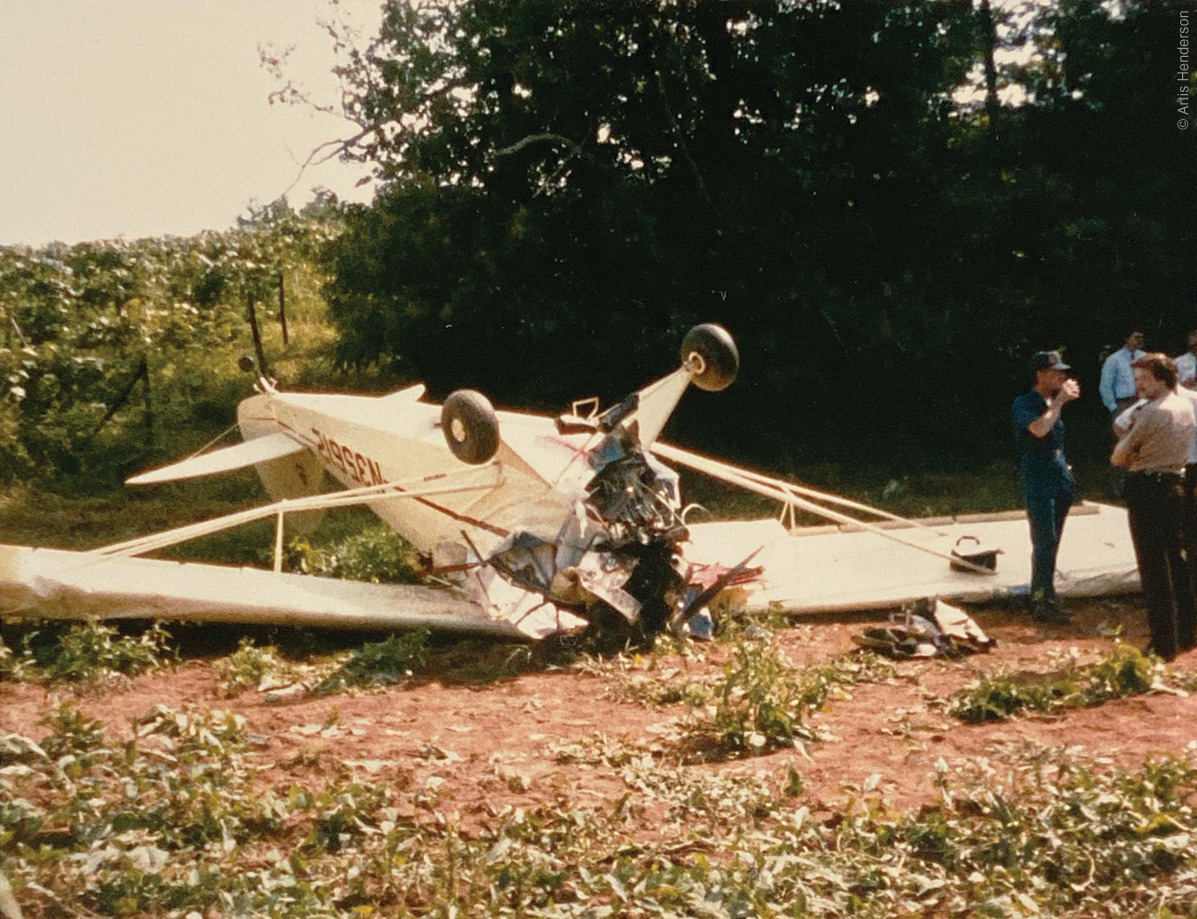
The plane wasn’t yet on the downward spiral that would end her father’s life and change the trajectory of hers when Artis Henderson C’02 W’02 asked a question she still doesn’t understand why her five-year-old brain would think to pose.
“Daddy, are we going to crash?”
Her dad, an experienced pilot at the controls of the single-engine, two-seat tandem aircraft, reassured her that everything was fine as they took a quick spin over their beautiful home in the Blue Ridge Mountains of North Georgia, just as they had many times before. Like always, she loved the aerial view of the dogwood, oak, and maple trees, the creek where the salamanders hid, the herd of cattle grazing in the pasture. “This was our farm, our home, our acreage,” she’d later write, “and I took unquestioning joy in its sun-dappled beauty.”
Then the plane fell from the sky.
Forty years later, Artis is still trying to sift through the wreckage of that awful June day in 1985. She remembers her grandmother carrying her away from the crash site after the plane flipped upside down. (Her grandparents witnessed the crash in horror from their neighboring guest house, and her grandpa pulled her out of the plane; her father died on impact.) She can hazily recall a little bit of what came next—not the three-day coma, of course, but the pain she felt from the fractured skull and broken vertebra when she awoke. The body cast she had to wear. All of the people who came to her home “trying to make me happy” as she recovered. Why she posed that eerily prescient question about the plane crashing to her dad—around whom she always felt so secure, so protected—remains both a mystery and one of her few vivid memories from when he was alive. “What made me ask?” she ponders today. “I wish to God I knew. I have no idea what made me say that.”
For much of her life thereafter, Artis rarely talked about the crash. But other mysteries and burning questions have never been far from her mind—mostly about her dad, Tilton Lamar Chester Jr., who went from working as a commercial pilot for Eastern Airlines to being federally indicted for leading a drug smuggling ring based on a private island he had purchased in the Bahamas.
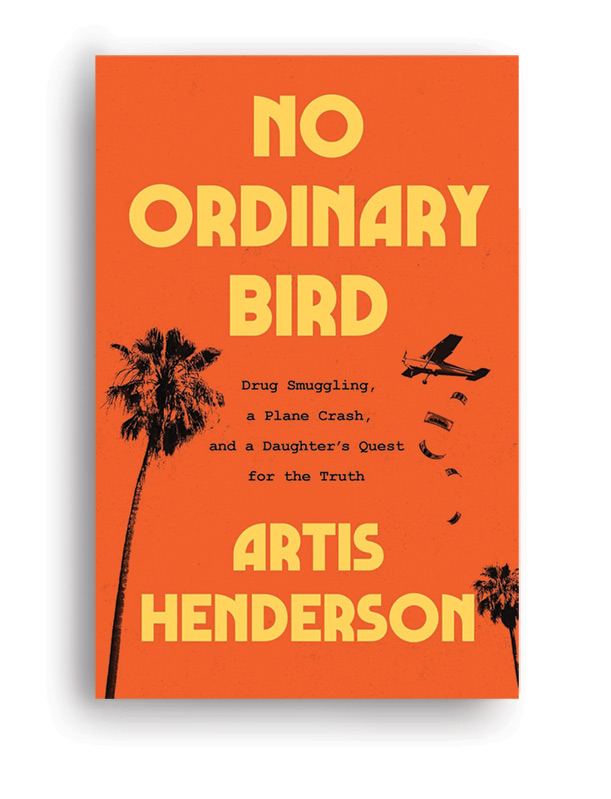
So the conservation journalist set out to learn more. The revelations recounted in the riveting book No Ordinary Bird: Drug Smuggling, a Plane Crash, and a Daughter’s Quest for the Truth (September 2025, HarperCollins) provided many cathartic answers—and left some mysteries still dangling in midair. “I’m grappling with this story as much as I’m reporting it,” Henderson writes in the author’s note, where she makes clear it’s a work of nonfiction with most dialogue sourced from newspaper articles and court transcripts.
The book opens with a prologue on the plane crash that took her dad’s life, the one she learned was celebrated by federal agents and that many around town referred to, simply, as the accident. It ends with the haunting realization, after thousands of hours of research, that it likely wasn’t an accident at all.
‘Memory Is Such a Strange Thing’
Henderson’s book is still a couple of months from its early September release when she logs onto Zoom to talk with me about it. Morning sunlight fills her “granny flat” (she prefers to call it a garden house) in Perth, Australia, where she’s studying marine stromatolites through the support of a 2024 Fulbright–National Geographic Award, gathering material for her next book.
But first she knows she must make the rounds talking about her current book. It’s an uncomfortable proposition for an introverted journalist often wracked with anxiety—even when she isn’t airing family secrets. “It’s like, Oh my God, it’s in the world and people know these things,” Henderson says, admitting to being nervous talking about it.
In its early stages, Henderson planned the book to be a less-personal account of the drug smuggling business built around interviews with non-family members. Then she tried writing it as a novel and “that was terrible,” she says. “At a certain point, it was like, OK, it’s time. I sort of realized I had enough material to put together a book proposal” told from her unique viewpoint as the daughter of an international drug smuggler. “The book is called a memoir, and there’s a little bit of me in it,” she says. “But I mean, most everything I learned about my dad, I learned from reporting. I knew nothing.”
Well, maybe not nothing. While interviewing family members to try to paint a picture of his life, certain things would come rushing back to her. Like how her dad, known as Lamar, smelled after putting on the cologne from the green bottle on the bathroom counter. Or that diesel engine grease smell from his planes. “Memory,” she ponders, “is such a strange thing.”
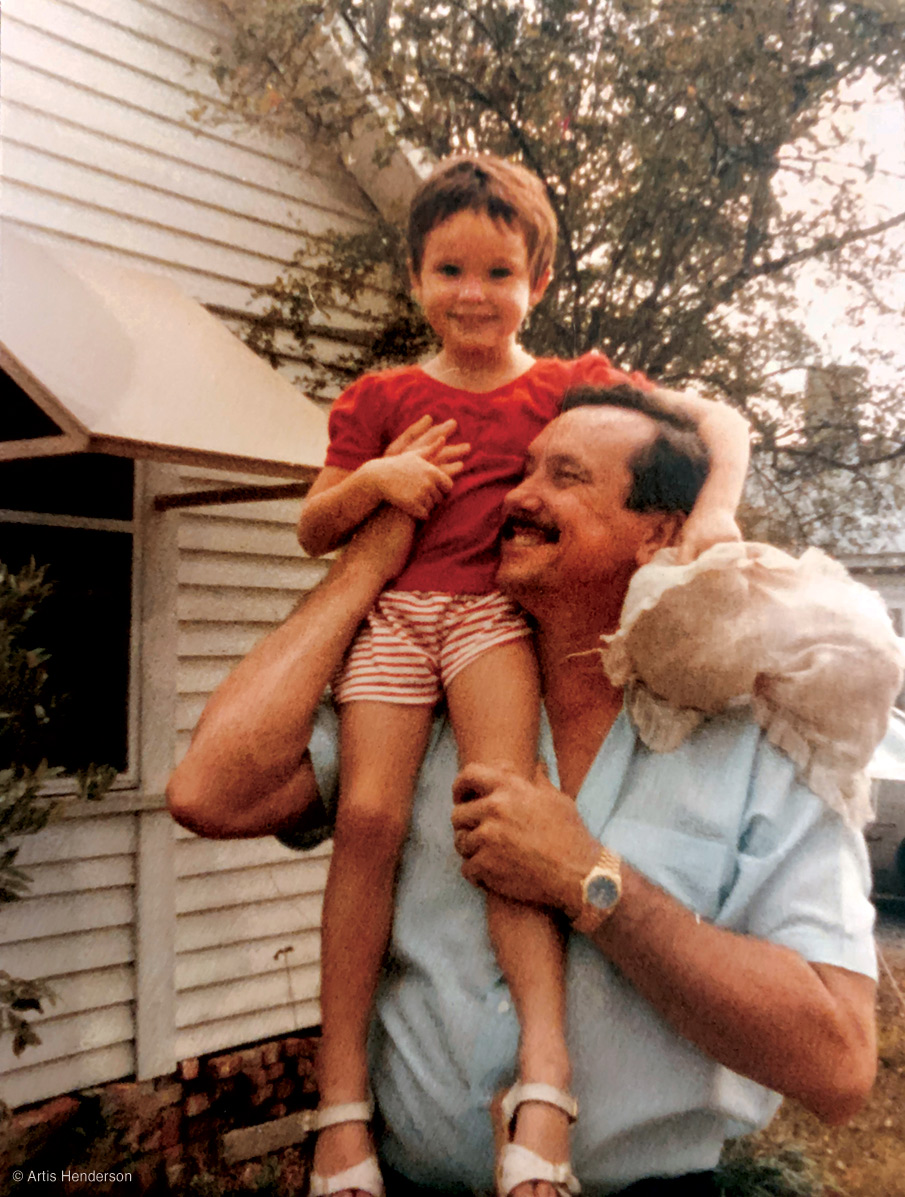
As anyone who lost a parent when they were young can tell you, rediscovering anything about a loved one can be extraordinarily emotional. For Henderson, it was also a bizarre experience because “he was such a secret,” she says. “We never talked about him. So once I started reaching out to people, they were dying to talk to me—maybe because so much time had passed.”
The secrecy was by design. After her father died, the IRS seized almost everything that belonged to him—cars, planes, boats, their home—so Artis and her mother bid farewell to their old life and drove to Florida to begin a new one in a little house on the gulf. “Life looked nothing like when my dad was alive,” Henderson writes. “We had no money. Almost no family and friends. There were no photos of my father anywhere. My mom went back to teaching, and we never talked about our life in North Georgia, though every day I missed our house and the mountains and the clear creek hidden beneath the trees.” Soon, she writes, her dad “became a shameful secret that I tacitly agreed to hide. Secrecy built up like scar tissue, twisted and knotted. The more time passed, the thicker it became.”
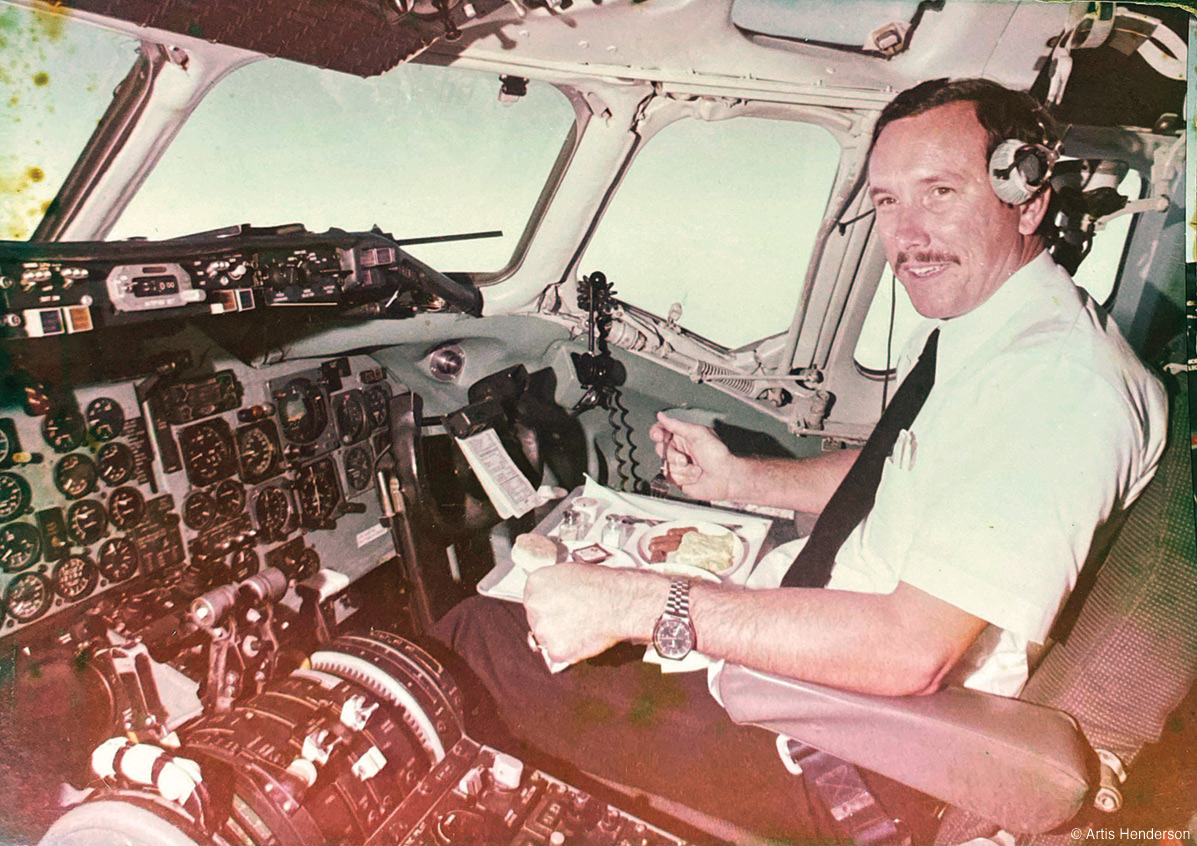
As she untwisted her father’s life, she learned about his modest childhood growing up in Georgia and Florida, having been born at the tail end of the Great Depression. He was “nuts about planes,” she writes, and joined the Navy and Air Force before becoming a pilot for Eastern Airlines in 1969. Lamar was fixated on being “an exceptional pilot.” He was daring in the air and magnetic on the ground, throwing parties in the suburban Miami home he bought for his first wife Nancy and their three young kids.
Her father’s marriage to the author’s mother, also named Artis, was the second for both of them. When they were first introduced, he brought her a pineapple he’d picked up in San Juan after a round-trip flight to Puerto Rico, looking “dashing in his Eastern Airlines uniform,” Henderson writes. “The chemistry between them was immediate.” After they married in 1973, the couple “projected a hunger for bigger things,” settling in an expensive apartment in downtown Miami. Henderson’s father, she learned, was constantly “propelled by a macho insatiability” to “feed what was eating him”—with money, with women, with power—and create a lifestyle a world away from the poverty he experienced growing up. So when Lamar was offered $8,000—nearly a third of his annual salary—to fly his single-engine Cessna 206 plane (nicknamed “the Hulk”) to Jamaica, where it would be loaded up with bales of marijuana, and back to Miami, he agreed. Henderson writes that Artis “quietly supported him,” baking her husband a Cornish hen for his long solo journey over water. When he returned to their apartment, he recounted to his wife “everything that’d happened in the last twelve hours,” already thinking about the next smuggling run—and “a future beyond anything he had imagined before, a future where eight grand was nothing.”
What started small indeed grew. Henderson reports that in 1976 her dad flew six loads of marijuana into the US, each between 600 and 800 pounds. The operation soon grew to involve more pilots and crew members. Cash was flowing in, so he hired a money man to set up bank accounts in the Cayman Islands. In 1977 he bought a 500-acre estate in North Georgia in the foothills of the Blue Ridge Mountains, where he built the huge house where Henderson lived the first part of her life. The next year, he used a shell corporation to buy a group of islands in the Bahamas known as the Darby Islands, to provide a secure refueling location for his planes that turned “my father’s midsize smuggling business into a major international operation” at a time when the Bahamas had become a major drug smuggling hub for Colombian cartels.
The Darby Islands also became Henderson’s second home as a young child.
Writing about a Polaroid photo from October of 1980, taken with her father in the Bahamas when she was four months old, she laments: “I want to freeze my dad in this moment, to say to him, Enough. I want to tell him to cash out. Leave the business. Take his money and run. But how could I explain that to a man who was at the top of his world?”
The Other Plane Crash
Three years after that Polaroid was snapped, the New York Times published a four-paragraph story on page 22 of its lead section of the October 4, 1983, edition:
Federal prosecutors unsealed a 36-count indictment today charging that a northeastern Georgia man led a large smuggling organization that shipped marijuana and cocaine into the United States from a base in the Bahamas.
The indictment charged Tilton Lamar Chester Jr., 45 years old, of Cleveland, Ga., and 11 others with drug offenses and with conducting a criminal enterprise in a pattern of racketeering.
Her father had been caught, and other newspapers picked up what was a juicy story amid a crackdown on drug smuggling. Henderson notes that her father didn’t mind the attention, even holding press conferences with the media while free on bond, having had to surrender his passport and pilot’s license. And between the indictment and the day he died, he still “made me feel safe and protected,” his daughter writes. “With me, he kept the worry that blanketed him at bay, allowing me those short, beautiful years of a briefly charmed life.”
But that illusion faded. After her father’s death, memories of him slipped away. Henderson became a bookish, studious kid because, she thought, “education was my way of distancing myself from what I understood to be my father’s shame.” That led her to Penn, where she was accepted into the University’s prestigious Huntsman Program in International Studies and Business. “I was so keen to just get out of there and just have this bigger life, this other life,” she says. “And Penn was my ticket to that.”
But it was a difficult transition coming from a small shrimping village in Fort Myers, Florida, where she notes a lot of people hadn’t even heard of Penn. She felt out of place and “had no idea how to dress for Philadelphia winters,” she laughs, recalling that she arrived on campus with a jacket so ludicrously puffy that someone told her she looked like the Michelin Man. Meanwhile, she tried to take up little space and avoid talking about the plane crash that killed her father and broke her back.
A study abroad program in France sparked an interest that brought her to Paris after graduation, where she taught for a year. Then she moved back to Florida, took a job in a senator’s office, and met an Army pilot from Texas named Miles Henderson, whom she married in 2006. “He was smart and funny and humble and a little bit country,” Artis says. And when she first took him to meet her mother, her mother surprised her by saying, “He is so much like your father.” Was it pure coincidence, since at the time Artis knew next to nothing about her dad? Or was something else stirring beneath the surface?
Either way, another pilot had flown into her life. And soon, another tragedy in the air would follow.
In her first book, Unremarried Widow: A Memoir (Simon & Schuster, 2014), Henderson richly recounts falling in love, the challenges of living on Army bases, the poetic letters the two exchanged after Miles was deployed to Iraq, and the fateful day she came home to find two soldiers in dress uniform sitting with her mother in a darkened living room. “I imagined my soul draining out of me like liquid mercury, disappearing into the ether of my suddenly intangible existence,” she writes. “I hesitated on the top step and thought about turning and walking back down to the garage. If I stayed on the far side of the door, the soldiers could not tell me what they had come there to say. If they didn’t say it, it wouldn’t be true.”
But it was true. On November 6, 2006, a little more than four months after getting married, Miles Henderson was killed in Iraq when his Apache helicopter crashed. In military parlance, that made Artis an “unremarried widow,” a term used for the spouse of a service member who died on active duty and has not remarried.
The grief that followed was overwhelming. She leaned on other Army widows for support, including the wife of the veteran pilot who’d been at the controls of the helicopter when it crashed, likely due to bad weather. She at times let her anger consume her—anger at the war, the world—and shut out her mother, even though she “had a road map for this grief.” Eventually they managed to find solace in their shared loss. And Henderson soon charted her own course, deciding to become a writer and attending Columbia University’s Graduate School of Journalism, where the seeds of Unremarried Widow were planted. But every day was a challenge.
“My husband’s death was like a terrible storm,” Henderson writes in No Ordinary Bird. “It came in and wiped me out, down to the concrete slabs. If I hadn’t lost my father in a similar way, then perhaps I would have been able to rebuild my life after my husband died. But two traumas of that magnitude, separated by twenty years, made it impossible. So I recreated a semblance of a life—a good life, even. I went to graduate school, I became a journalist, I reported in West Africa, I lived in New York. I sold my first book. I traveled widely. I had friends and lovers. But the life I was craving, a life filled with deep connections? No. I rebuilt what I could using pieces of corrugated tin, scraps of lumber, a blue tarp for a roof. I pulled this shelter over myself, and I waited for the next storm, the one that would come in and wipe it all away again.”
What Could Have Been
Artis Henderson thinks about her “ghost lives,” the ones that don’t exist but could have. What would her life have been like had her dad survived, quit drug smuggling, and avoided prison? Would she have spent her entire childhood in the bucolic mountains of North Georgia? What if her husband had returned home from Iraq after the war? “I think we would have had a very normal, very happy domestic life,” she says from her flat in Perth. “But who knows, right?”
“So I mean, where do you go? You have these two traumas, and then—well I guess you go here. I guess you go to Australia. In a way, it’s given me permission to have this other life.”
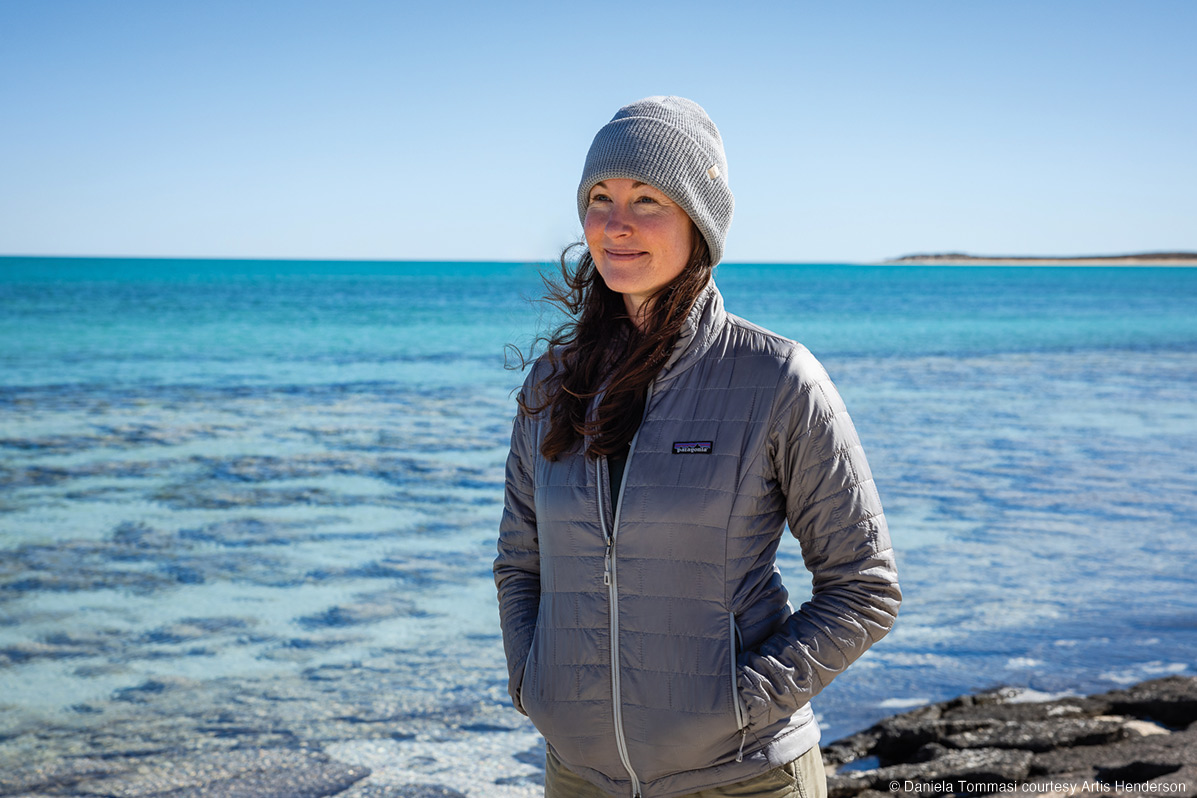
Perennially braced against the next life-shattering storm, she has remained untethered, traveling the world, trying to be adventurous in the face of anxiety, writing essays and articles about conservation and environmental issues for publications including National Geographic, the New York Times, and Reader’s Digest. She’s a certified master naturalist and advanced open water diver. Last year, she won a 2024 Fulbright–National Geographic Award, given annually to five individuals to carry out projects around the world that support the conservation of the planet’s lands and oceans. “I’ve been working toward this for a decade,” she says, calling it the “culmination of a dream” on par with getting into Penn’s Huntsman Program.
The award sent her to Western Australia for eight months, where she studied how climate change and sea level rise impact the marine stromatolites of Shark Bay. Marine stromatolites—which are layered, rock-like structures found in shallow water—are important, she notes, because they can help explain the earliest conditions on Earth as well as the potential for life on Mars. Before returning to the US in September, timed with the release of No Ordinary Bird, she worked with a team of scientists that included a paleontologist, an astrobiologist, and an oceanographer, as well as with the Malgana people, an Aboriginal Australian group recognized as the traditional custodians of Shark Bay. She intends to use the research as material for her third book, which she describes as a “braided narrative” that will include the perspectives of those scientists and the Malgana elders with her own experiences.
She also soaked up every minute of her travels in a place she described as “wild.” In addition to several expeditions to Shark Bay, she camped at a sheep station and went swimming with whale sharks—some 40 years after she used to jump off the dock on her family’s own private Bahamas island and swim near lemon sharks. “That was the best thing ever—but also terrifying,” she recalls, tracing her interest in oceans and conservation to that formative experience. And that wasn’t the only connection between her time as a “wild and feral” little kid in the Bahamas and her life today as a nomadic conservation journalist. The two main places that marine stromatolites exist are in Western Australia and the Bahamas, the latter being where she first discovered them. “So if my dad had never been a drug smuggler, I would not be in Western Australia,” she says.
While researching No Ordinary Bird, Henderson learned more about those years in the Bahamas in the early 1980s. She connected with a family who’d undertaken a yearlong sailing voyage in 1983 that led them to the Darby Islands and a chance encounter with Lamar, who graciously gave them a tour of his house, shocking them with an icemaker and big-screen TV. “They thought my dad was like the coolest guy they’d ever met,” Henderson says, adding that the family still kept photos of her dad 40 years later and had been curious about him ever since. They weren’t the only ones eager to share fun stories about Lamar. “Because my dad had been such a secret for me growing up, I maybe had this idea that he wasn’t a great guy. I just assumed the worst. And then I had all of these people talk about just how cool he was, and how interesting and warm and charming he was.”
She also interviewed people who knew more of the details about the investigation leading up to his indictment, his subsequent legal fight, and the revelation that he potentially worked for the federal government as an informant. Many who knew him best maintain that there’s no way a pilot as experienced as Lamar would have crashed his plane that day in 1985. There’s more to the book’s final chapters that would be best read without spoilers, including the Iran–Contra affair, the Bahamian Royal Commission of Inquiry, several Freedom of Information Act requests, a reunion with an uncle in the witness protection program, and conjecture that someone in the government messed with a bolt on the plane to kill her dad. There’s still a shred of doubt, but Henderson came away from her reporting with a firm belief. “So many people he was involved with would have liked him to be dead,” she says. “It’s hard to imagine that it was an accident.”
Yet the final chapters of No Ordinary Bird aren’t all bleak. They also see Henderson return to North Georgia, where she learns the house she used to live in wasn’t torn down as she thought, but instead turned into a retreat center by a local Baptist church. There, on rocking chairs that felt like home, on the porch she thought was gone, she happily chatted with old neighbors and friends of Lamar. She also writes about how she’s grown closer with Lamar’s children from his first marriage, her half-siblings who “alternate being wildly proud of me and supportive and then just absolutely making fun of me,” as siblings do.
“You have to be obsessed with something to write a book,” Henderson says. “And this story has sort of obsessed me my whole life, and especially these last 10 years. But also these amazing things have come out of it. Because now I have this whole family that had sort of been hidden from me. My brother Terry, who I talk about in the book, we had no relationship before this book and now he’s like my favorite person. It’s such a gift.”
As for her father, Henderson still wonders about an alternate reality had he not been sucked into the drug smuggling world. “Here’s this man who was super smart and had all these talents,” she says. “And it’s like, ‘What else could he have done? What else does someone do who wants a big life but doesn’t have access?’”
She likes to think he’d be proud of his daughter—for the books, her journalism, her life. And in a way, after hearing so much more about him, she’s proud of him, too. Sadly, they’ll never be able to build on what could have been a special father-daughter relationship. They’ll never scuba dive or snorkel or go spear fishing together, as he liked to do. They’ll never create more memories like the one she writes about, not long before he died, when they sat in the dusty cab of his truck, eating scalding hot boiled peanuts he had bought from a roadside stand, the song “Take Me Home, Country Roads” playing on the radio.
And yet, a piece of her father still lives inside of her. It wasn’t long ago that an old friend of Lamar’s called her up while she was in Australia. She was between expeditions to Shark Bay when he said something she’ll never forget.
“That adventurous streak in you,” the man told her, “that’s your daddy.”