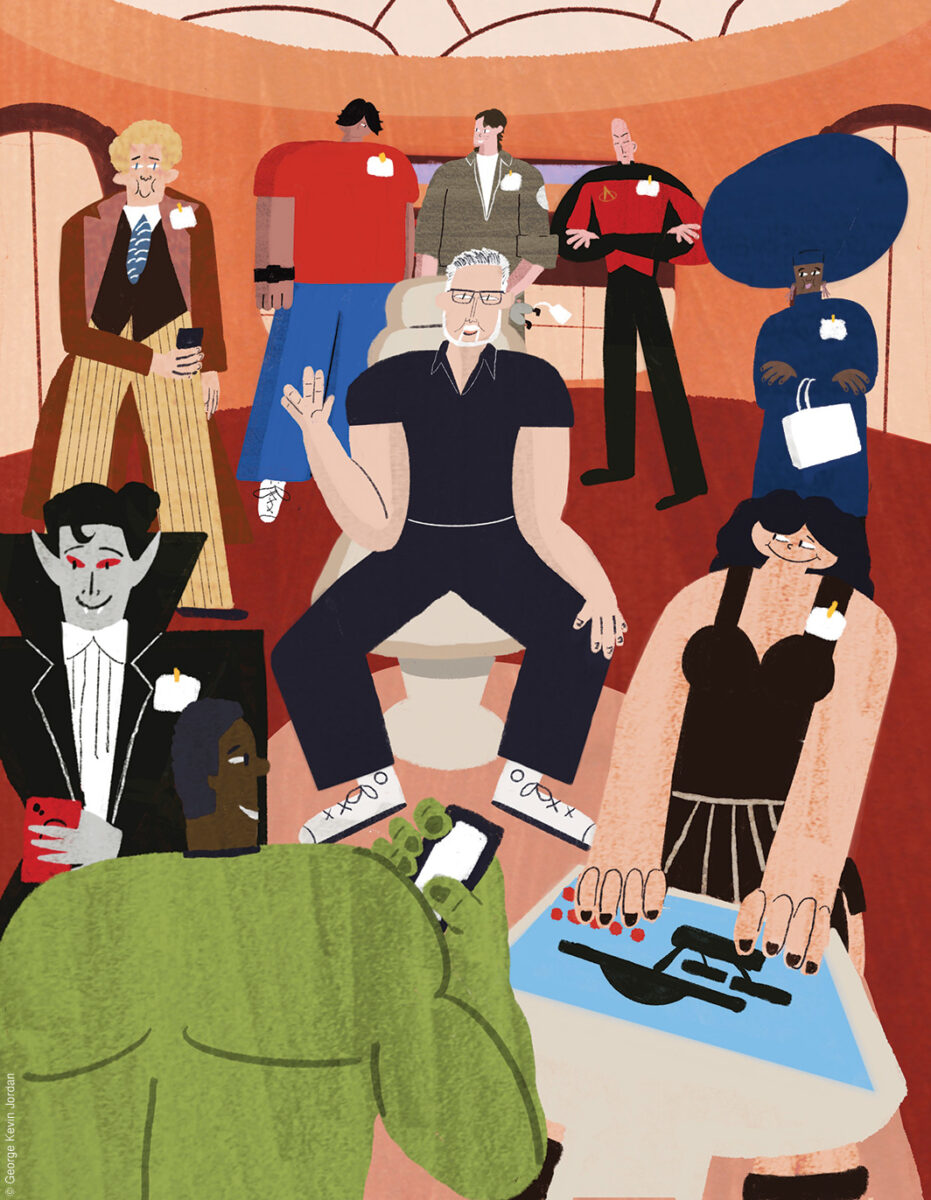
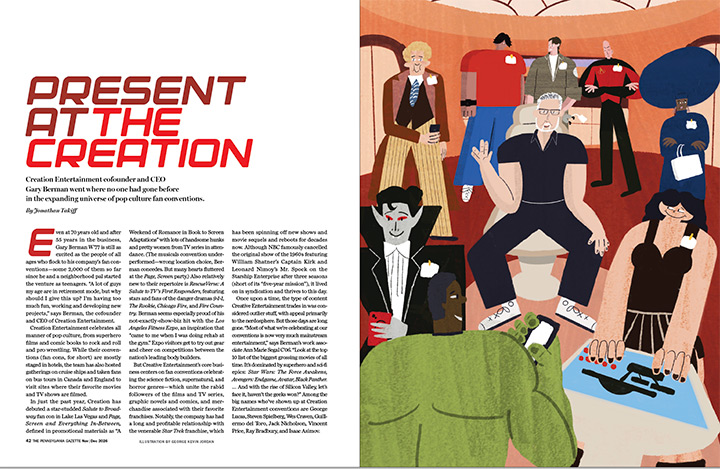
Creation Entertainment cofounder and CEO Gary Berman W’77 went where no one had gone before in the expanding universe of pop culture fan conventions.
By Jonathan Takiff
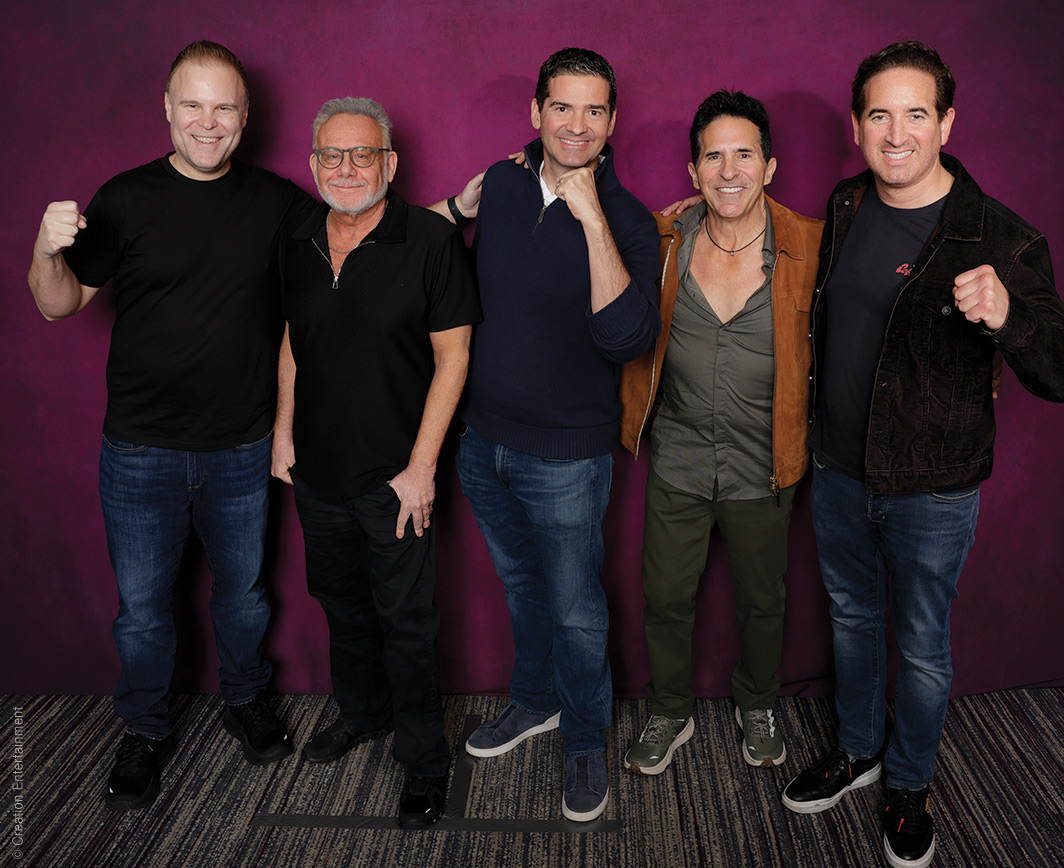
Even at 70 years old and after 55 years in the business, Gary Berman W’77 is still as excited as the people of all ages who flock to his company’s fan conventions—some 2,000 of them so far since he and a neighborhood pal started the venture as teenagers. “A lot of guys my age are in retirement mode, but why should I give this up? I’m having too much fun, working and developing new projects,” says Berman, the cofounder and CEO of Creation Entertainment.
Creation Entertainment celebrates all manner of pop culture, from superhero films and comic books to rock and roll and pro wrestling. While their conventions (fan cons, for short) are mostly staged in hotels, the team has also hosted gatherings on cruise ships and taken fans on bus tours in Canada and England to visit sites where their favorite movies and TV shows are filmed.
In just the past year, Creation has debuted a star-studded Salute to Broadway fan con in Lake Las Vegas and Page, Screen and Everything In-Between, defined in promotional materials as “A Weekend of Romance in Book to Screen Adaptations” with lots of handsome hunks and pretty women from TV series in attendance. (The musicals convention underperformed—wrong location choice, Berman concedes. But many hearts fluttered at the Page, Screen party.) Also relatively new to their repertoire is RescueVerse: A Salute to TV’s First Responders, featuring stars and fans of the danger dramas 9-1-1, The Rookie, Chicago Fire, and Fire Country. Berman seems especially proud of his not-exactly-show-biz hit with the Los Angeles Fitness Expo, an inspiration that “came to me when I was doing rehab at the gym.” Expo visitors get to try out gear and cheer on competitions between the nation’s leading body builders.
But Creative Entertainment’s core business centers on fan conventions celebrating the science fiction, supernatural, and horror genres—which unite the rabid followers of the films and TV series, graphic novels and comics, and merchandise associated with their favorite franchises. Notably, the company has had a long and profitable relationship with the venerable Star Trek franchise, which has been spinning off new shows and movie sequels and reboots for decades now. Although NBC famously cancelled the original show of the 1960s featuring William Shatner’s Captain Kirk and Leonard Nimoy’s Mr. Spock on the Starship Enterprise after three seasons (short of its “five-year mission”), it lived on in syndication and thrives to this day.
Once upon a time, the type of content Creative Entertainment trades in was considered outlier stuff, with appeal primarily to the nerdosphere. But those days are long gone. “Most of what we’re celebrating at our conventions is now very much mainstream entertainment,” says Berman’s work associate Ann Marie Segal C’06. “Look at the top 10 list of the biggest grossing movies of all time. It’s dominated by superhero and sci-fi epics: Star Wars: The Force Awakens, Avengers: Endgame, Avatar, Black Panther. … And with the rise of Silicon Valley, let’s face it, haven’t the geeks won?” Among the big names who’ve shown up at Creation Entertainment conventions are George Lucas, Steven Spielberg, Wes Craven, Guillermo del Toro, Jack Nicholson, Vincent Price, Ray Bradbury, and Isaac Asimov.
“Mostly for laughs,” Berman recently asked an AI assistant to share what it knew about his usiness. “AI said we’d ‘pioneered the modern fan convention as a gathering where fans of a show, genre, or hobby meet to chat, attend panels, see creators, trade merch, and often dress up as their favorite characters.’” Berman’s bot bestie also noted that Creation Entertainment “hosts the world’s largest Star Trek fan convention, holds official rights for series like Twilight and Stargate SG-1, [and] led the way with comic book conventions in the ’80s.” But perhaps most important to Berman, it concluded that Creation was “the first to turn fan conventions into a viable business, coming up with the commercial model for events—the good practices, the show structuring and content, the pricing for activities and the concept of a traveling fan convention that bounces from city to city, like a touring Broadway show.
“So who am I to argue with all that?” Berman says.
What the AI tool didn’t share was that Berman and his lifelong Queens, New York, neighbor/pal Adam Malin were mere sprites—just 14 years old—when they kickstarted the fan convention as we know it today.
How did it come to pass? Flashback to Manhattan in 1970. The young Gary and Adam are checking out the New York Comic Art convention—one of the first ever held in the city.
“There wasn’t much to it—just a bunch of guys hovering around merchandise tables, buying and selling comic books,” Berman remembers. “But then it got us thinking: Hey, we could do a comics convention better than that! We could dress up the space. Bring in celebrity guest speakers. Run talent contests. Show films all night. Encourage fans to come in costumes, honoring their favorite characters,” a gambit that would come to be known as cosplay. “We could have fun.”
Not long after, they ventured to the New Yorker Hotel. After scoping out the place, they cornered a manager and asked how much it would cost to rent some meeting rooms. “The guy looked at us kids like we were crazy and threw out a rental figure—$800—that he thought would scare us away,” Berman chortled.
Not a chance. The two budding entrepreneurs had already accumulated most of that room ransom with profits from other childhood ventures. “I’d been collecting and selling old coins,” Berman recalls. “Adam had a paper route and was trading comic books—he was a real expert on that subject. And we’d both done very well with a miniature golf course that we set up on a vacant lot near our apartment building—until a mean neighbor took out her garden hose and washed it away.”
Adam’s dad (a commercial artist) agreed to cosign the rental agreement for the convention space and coughed up additional startup bucks. Gary wisely placed classified ads for the event in the back of comic books. Adam somehow managed to persuade Marvel Comics illustrator/storyteller Jim Steranko, famous for his work on Nick Fury, Agent of S.H.I.E.L.D. in the 1960s, to be their special guest.
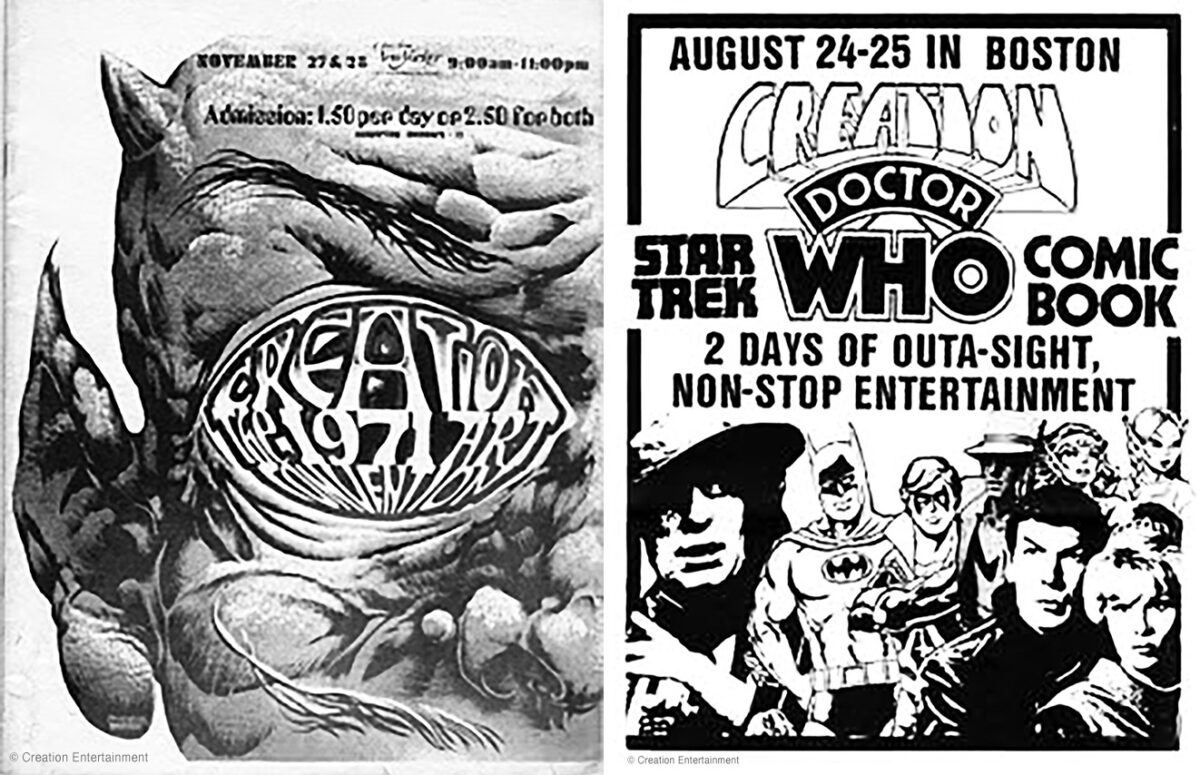
Launched in 1971 on Thanksgiving weekend, “when kids were home from school,” their Creation Comic Art Convention pulled in 800 people at $1.50 a ticket, managing to turn a profit. “We were on our way,” says Berman.
By the time Berman landed at Penn in the fall of 1973, the pair had executed two more, bigger comic book shows. They’d also introduced “a pretty popular fanzine about comic art that sold thousands of copies,” he adds.
But Berman downplayed his business experience in his college classes, keeping it a secret from professors—even the one teaching what he recalls as Wharton’s new and then only course in entrepreneurship. Friends at Penn knew what he was up to, though, and were very supportive. “There were times when I thought Gary should be the one in front of the class, teaching,” says his classmate and lifelong friend, Alan Berkowitz W’77 WG’82.
Berman’s dorm room in High Rise East doubled as the company’s headquarters. “I remember walking into Gary’s dorm room with dinner I’d made—meatballs and spaghetti—and there was nowhere to put the food down or sit,” Berkowitz recalls. “Gary had poster boards spread out all over the place. He was pasting together advertising layouts and display materials for his next fan con—this was in the pre-computer-graphics age—and gabbing long distance with Adam Malin, who was in school at Stony Brook. Later I realized it was like Michael Dell selling personal computers from his dorm room when he was in college. Pretty much the same thing.”
Other classmates also traded resources and expertise. Berman recalls helping one develop an end-of-term project for his entrepreneurship class, and “in return he helped me with statistics and data science, which came harder to me.” For his own project in that entrepreneurship final, Berman remembers proposing “a restaurant that only served desserts. It’s a real thing now.”
All the while, Berman’s and Malin’s side hustles continued to grow in stature and popularity, with more grandiose branding names. Big Comicon Creation. Creation Comic Book & Pop Culture Convention. Attendance climbed to 5,000 for the three-day event they staged during their senior year over Thanksgiving weekend 1976 at New York City’s Statler Hilton. The New York Times headlined its coverage “2 Collegians Get an ‘A’ in Comic Book.”
It helped that these pop culture celebrants were riding a big wave of interest in comics, which were becoming more sophisticated and reaching a wider audience than in earlier decades. Modern comic book history is generally broken down to a golden age running from the late 1930s to the 1950s, which saw the introduction of familiar figures like Superman, Batman, Captain America, and Wonder Woman, followed by a silver age in the 1960s and a bronze age starting in the 1970s. Comics in the latter eras offered a more sophisticated breed of superheroes and villains. These were characters who reflected the times, paraphrased Shakespeare, fell in love, suffered psychological stress, and even admitted failure. The artwork was far more daring and imaginative too, breaking out of the comic book panel, surrealistically blowing minds, and helping fuel the Pop Art movement. So the books had become socially acceptable for “grown-ups” to read, analyze, and trade—with early, landmark titles by the leading comics publishers Marvel and DC fetching thousands of bucks at auctions.
Once graduated, Berman and Malin plunged deeper into their alternate universe. “We started staging comic shows in multiple cities,” Berman says. “We got into retail. Dedicated comic book shops had become a thing, supplanting the traditional newsstand distribution system. At one point there were 3,000 in the country and we had four ourselves. The stores became our Ticketmaster, selling tickets to our shows.”
In 1979, the pair experienced an epiphany, Berman recalls. “We’d invited Walter Koenig—Ensign Chekov on the original Star Trek series—to a comic convention. People went wild, swamped the room, much more excited than they ever were for visiting comic illustrators, inkers, and writers.”
So the duo started to shift gears, adding new fan cons dedicated to Star Trek, the British hit Doctor Who as it gained traction in the US, and other sci-fi TVshows that brought comic-book-style characters to life. Their star-studded enterprises really blasted off with the arrival of the follow-up series Star Trek: The Next Generation (TNG) in 1987. TNG premiered in syndication, meaning that it was bought and broadcast (as management saw fit) by individual, local TV stations rather than being locked into a weekly time slot on a national network. “We could now efficiently buy TV spots just in the markets where we were holding conventions,” Berman says.
At the peak of Star Trek’s popularity in the late 1980s and early 1990s, Creation Entertainment was organizing upwards of 110 Star Trek conventions a year, often running three or more in a single weekend. “We’d have William Shatner in New York and Leonard Nimoy in New Haven on a Saturday. Then they’d flip, trade locations on Sunday.”
Eventually the Hollywood community figured out that the hardcore fans who frequented the cons were ripe for promotions about upcoming sequels and primed to buy show-related merchandise—action figures, coffee mugs, all kinds of goodies to take home. “Paramount granted us a merch license, initially just for Star Trek cast photos,” Berman says. “Then other studios noticed and started to do the same. We really jumpstarted a huge business in collectibles.”
Last summer’s sold-out Star Trek convention in Las Vegas was the biggest ever, says Berman, marking 60 years of the never-say-die franchise, which to date has spawned about two dozen different TV series and movies. It also marked Creation Entertainment’s 25th Star Trek Las Vegas convention.
You can get a pretty good sense of what a Star Trek convention is like (and a fleeting glimpse of the promoters) by watching William Shatner’s shot-on-location, 2012 documentary Get a Life! Yes, the title was derived from a classic Saturday Night Live sketch wherein an exasperated Shatner puts down a trivia-obsessed Trekkie. “But he’s never really uttered that line at one of our conventions,” muses Berman. “And we’ve never found Shatner difficult to work with at all.”
While Star Trek has proven an exceptionally stable subject for Creation events, other fan conventions themed on TV series and film franchises have waxed and waned in popularity. Past partners have included famous and niche properties such as Xena: The Warrior Princess, The X-Files, Stargate, Twilight, The Lord of the Rings, and Game of Thrones. Relatively late into its run on PBS stations, the BBC series Doctor Who became a huge draw, sparking 42 Creation fan cons just between 1984 and 1986. Much more recently, Cobra Kai, a martial arts comedy-drama that serves as a sequel to the Karate Kid films of the 1980s, earned two Creation Entertainment showcases in 2025 and 2026. Streamed on YouTube and Netflix from 2018 to 2025, the series was cocreated by Josh Heald W’00, Jon Hurwitz W’00, and Hayden Schlossberg [“Arts Blog,” May 2019].
Pickup by a streaming service can revive a dormant series and its stars’ careers, making them fan con-friendly again. The same goes for new projects undertaken by a series star or a sudden surge in social media attention. “We’ve helped with the latter,” Berman says. “We know of at least one actor whose character was about to be written out of a series. After she came to a convention and got fans talking her up online, the showrunner put her back in for the next season.”
At present, Creation Entertainment’s other hot properties are Supernatural, which follows two monster-hunting brothers, and The Vampire Diaries (about real and vampire teens in a small town, based on a book series of the same title). Although the multiseason shows have concluded production, both keep on growing their fanbases via streaming. “And their cast members love coming to our conventions,” notes Ann Marie Segal. “They get a great response, and for some, we’re now their major source of income. For Supernatural costar Jensen Ackles, it’s also a chance to showcase his considerable talents as a singer and guitar player—which delights Gary.”
“Live music has always been an integral part of our conventions, part of the major entertainment component that separates us from the competition,” she adds. “We usually have a house band like The Roddenberries”—whose name derives from Star Trek’s creator/producer Gene Roddenberry, and which bills itself as “the galaxy’s premier sci-fi party band”—“to entertain with original material, covers and song parodies. The band also provides backup at our talent contest.”
For Creation Entertainment’s regional Trek 60 convention being held in Philadelphia on November 14–15—the company’s first foray into Philly to celebrate Star Trek—general admission is $50 for a one-day pass and $99 for the full weekend. Various special packages range from $229 to $850.
While cast members appearing at conventions don’t generally get a share of ticket sales, series regulars do profit handsomely by pocketing fees from fan autographs and photo ops. An 8×10 glossy photo of you with a show favorite will run you $40 to $100, depending on the actor’s importance to the show, and a group pic with several characters might cost between $90 and $250. A celebrity autograph goes for about $80. The talent quotes the exact price when you step up to the table and present what they’re autographing.
How about series stars and the legendary, behind-the-camera masterminds? What do they earn for speeches, panel discussions, celebrity breakfast appearances and such? Berman is guarded on that subject, but he concedes that “the sky’s the limit” for headlining talent at the larger, corporate-run fan conventions like ComiCon, FanExpo, and Galaxy Expo, whose practices he refuses to emulate.
“The real problem there is the overcrowding,” he explains. “Those other shows are held in huge convention centers. Daily visitor counts number in the tens of thousands. The aisles and escalators are dangerously packed, pickpockets prowl. Worst of all, ticketholders have to enter a raffle just to score a seat for celebrity-driven events. We respect our fans, would never sell more admissions than we have seats to accommodate them, with our biggest ballrooms seating about 6,500. We don’t want to run the biggest conventions, just the best.”
“Gary is a very caring guy,” says Segal, a former medical doctor who “gave up the stress” and found comfort in this fan culture world. “He treats everyone well.”
“Our fan conventions are inclusive, offer a welcoming environment to everyone,” Berman concludes. “Many a friendship has been started here, as people share their common interests, their passions. We see a surprising number come back, even from distant locations—Germany, Japan, Australia. And we hear a lot from professionals in the entertainment industry—rival fan con promoters; the Superman film director and head of DC Studios James Gunn—that they were inspired to jump into this world after attending our conventions. So we must be doing something right.”
Jonathan Takiff C’68 writes on consumer tech, lifestyle, and entertainment.