
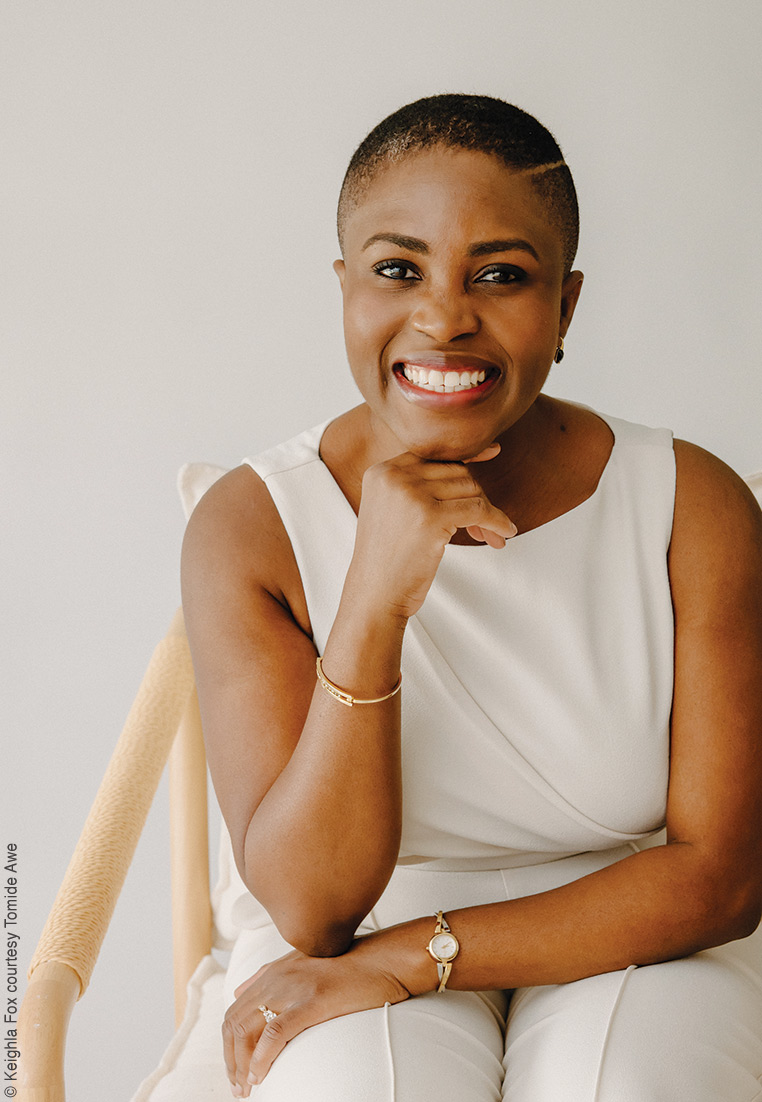
A former owner of a luxury handbag brand celebrating African heritage is now helping other women build businesses.
Growing up in Nigeria, Tomide Awe WG’17 watched her mother do something quietly radical. In a country where educating daughters was often considered less important than educating sons, Awe’s mother had obtained her own education against the odds and was determined to help her children do the same. “She understood what education had opened up for her,” Awe says. “She wanted to make sure we had access to those same possibilities.”
That lesson—that access changes the direction of a life—became the thread running through everything Awe would go on to build.
She arrived at Wharton in 2015 intending to become an investment banker. An internship at Credit Suisse in London cured her of that idea quickly. “It taught me that I hated banking,” she says. What Wharton gave her instead was something more useful: permission to follow her curiosity. She took classes based on her interests, eventually majoring in entrepreneurial management and strategic management. She also began quietly developing a business idea, testing concepts in entrepreneurship classes and gathering feedback from classmates who became her first focus group.
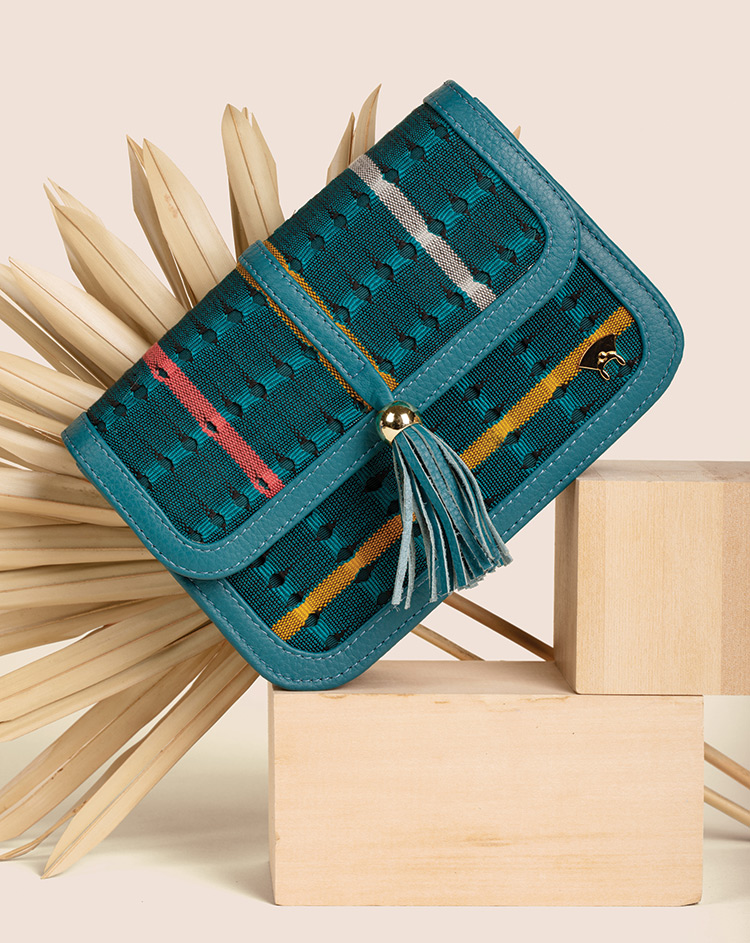
That idea became Olori, a luxury handbag brand pairing traditional African textiles with a social mission: every bag sold funded a month of education for an under-resourced girl in Africa. Awe had grown up surrounded by Nigerian fabrics at family weddings and gatherings, and she wanted to find a way for women anywhere to carry that beauty with them. The handbag felt right, practically and symbolically. “You’re carrying our handbag, and you’re actually lifting another girl out of poverty,” she said at the time.
She built Olori the way she would build everything: in the margins. During Wharton classes, she developed the concept through entrepreneurship exercises. During holidays, she traveled to Nigeria to meet with artisans and prototype designs. Back on campus, she ran surveys and held focus groups. By graduation, launching felt like the obvious next step.
What followed was seven years of running two lives at once. Olori grew into a six-figure business, earned coverage in Glamour, Bustle, Mic, and The Business of Fashion, won the FedEx Small Business Grant, and raised roughly $22,000 through Kickstarter before its official launch. Awe ran it while holding senior strategy and operations roles at Twitter and then Meta. “If I was not able to use certain skills in my role, I could come home and be the head of marketing, the head of operations, the head of product, and the CEO,” she says. “I developed range in ways that my job alone would never have allowed.”
But when she married and became a mother, the equation shifted. A difficult pregnancy forced hard choices about what she could sustain. Olori, which had begun following traditional fashion industry cycles with seasonal collections and growing inventory demands, had lost much of the joy it once gave her. She paused the business. “I have made peace with the fact that what existed before may not be what exists in the future,” she says. “I am comfortable with it being parked right now because the old version no longer fits my life.”
The corporate chapter ended painfully, too. In 2023, deep stress and depletion led Awe to take medical leave from Meta. For three months away from work, a therapist told her she was in a depressive state. “That was shocking because it was not language that had ever been used to describe me before,” she says. The experience cracked something open. Through therapy, she completed an exercise centered on values. The one that rose above everything else was freedom. “I realized how trapped I felt and how much of my life had been built in ways that left me feeling caged,” she says.
She returned to work but knew she would not stay. She began researching, writing on LinkedIn, and quietly coaching women who wanted to build businesses alongside their corporate careers. When she was eventually laid off, she did not go looking for another role. Instead, in July 2025, she officially launched On Your Terms, a coaching platform for high-achieving women navigating the gap between leaving a successful career and knowing what to build next.
The women she works with are not short on ambition or ideas. They are short on direction. “They stay intellectual,” Awe says. “They have several ideas, and rather than choosing one and testing it, they remain in planning mode. They create documents, build frameworks, compare possibilities. But they start confusing the quality of their thinking with evidence that the idea will actually work.”
Her methodology moves through three phases she calls Conviction, Strategy, and Build. In the first phase, she gets everything out of a client’s head and onto the table: their ideas, fears, financial realities, family responsibilities, and capacity. Together they evaluate business directions against personal and commercial criteria, from the client’s strengths and energy to market demand and speed to revenue. Strategy follows: defining the customer, the problem being solved, the pricing, and the simplest path to revenue, tested against real conversations with potential buyers rather than guesswork. Finally, Build turns the strategy into a focused 90-day plan built around the client’s schedule, energy, and responsibilities. “The goal is not to manufacture certainty before they begin,” Awe says. “It is to gather enough evidence to choose one direction thoughtfully, understand why it fits, and stop splitting their attention across several possibilities.”
The results suggest the framework works. Shezal Baig, founder of the home goods and jewelry brand SAÉA, came to Awe wanting to launch her first product line. She crossed $10,000 in revenue within her first five weeks. In the year that followed, she secured $25,000 in grant funding, generated more than 1,000 sales across Etsy and her own website, sold out multiple times, and attracted boutique retailers.
Awe traces the throughline of her career not as a series of pivots but as a single thread she kept picking up in whatever time was left over. “I have always been drawn to helping people build a life beyond the limits they were handed,” she says. “I just kept doing it in the margins.”
Now, for the first time, she is building it in the open.
—Tasmiha Khan