For the director of JPMorgan’s corporate history program, “there’s always something new to learn.”
At the beginning of August, JPMorgan Chase threw a dinner party to celebrate the 10th anniversary of the Broadway show Hamilton. It took place on the stage of the Public Theater, where the megahit musical first premiered off-Broadway, in front of a recreation of the original set.
Lin-Manuel Miranda, Hamilton’s creator and original star, answered questions from the audience. He then performed a few songs along with Renée Elise Goldsberry, who originated the role of Angelica Schuyler, and Leslie Odom Jr., who played Aaron Burr.
Rachel Moskowitz C’06, director of the JPMorgan Chase Corporate History Program, was on hand to tell guests—including clients, celebrities, and journalists—how closely the financial corporation is linked to the famous play.
“We do talk a lot about the duel between [Hamilton and Burr] and the rivalry because they were the founders of JPMorgan’s earliest predecessor institution,” she reflected later, explaining that the rivals established a water company in 1799 that soon became a bank, which ultimately evolved into JPMorgan Chase.
She showed guests an original cross section of a pipe that was used to deliver water from the historical company’s reservoir to homes and businesses in Lower Manhattan, and replicas of the pistols used in the fatal 1804 duel that ended Hamilton’s life. The original pistols? Those are displayed in JPMorgan’s corporate headquarters in Manhattan.
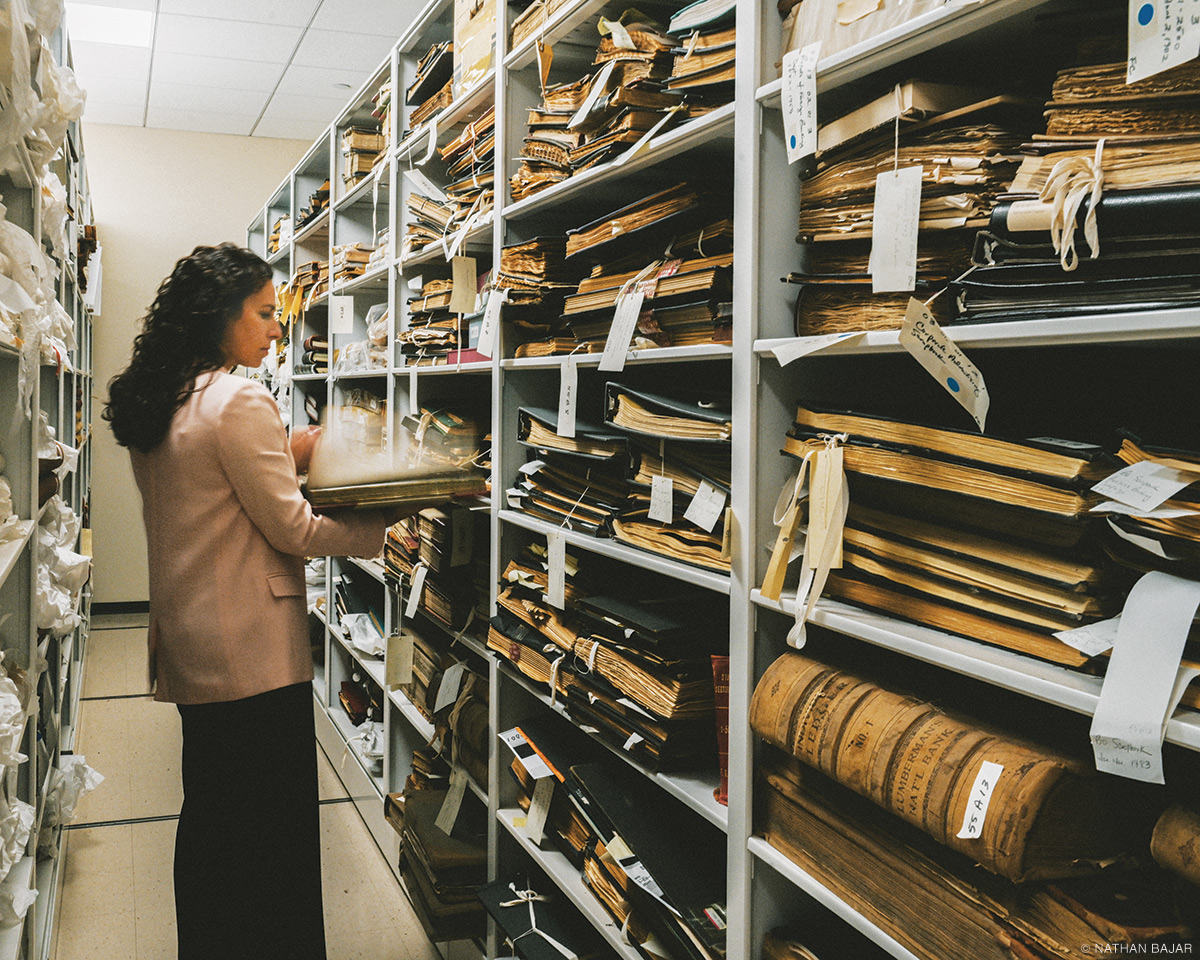
Since 2014, Moskowitz has been part of a six-person team that she now leads that’s responsible for preserving the more than 225 years of history of JPMorgan, helping collect the documents, artifacts, photographs, advertisements, newsletters, and artwork that tells the firm’s story. She then shares the tales with employees, clients, and the wider public.
The Penn history major didn’t exactly imagine working at a bank. But Moskowitz says the job has been fascinating and fulfilling. “This bank’s history is intimately tied to American history, to international history,” she notes.
At Penn, Moskowitz was inspired by classes she took with Kathleen Brown, the David Boies Professor of History who teaches about gender and race in early America; and Kathy Peiss, the Roy F. and Jeannette P. Nichols Professor Emerita of American History who focused on modern American cultural history.
Not knowing exactly what she wanted to do with her history degree after college, she worked as a production assistant and filmarchivist at a production company that produced documentaries for the History Channel, National Geographic, and Discovery Networks. She also spent a summer on a Penn-sponsored excavation at an ancient site called Mount Lykaion in the Peloponnese region of Greece. She was on the topographical survey team, which performed surface surveys of the landscape, and worked with the excavations registrar to clean and catalog all the finds at the end of the day. “Every summer subsequent to that, I wanted to return,” she says. “But once you have a job, it’s really hard to say, ‘I will see you in two months.’”
As part of her senior thesis seminar with Brown, she had visited the Historical Society of Pennsylvania, where she learned about the role of archivists. After graduating, she returned as a volunteer and loved working with the collections so much that she moved to New York to pursue a master’s degree in history and archival management at NYU.
One of her first jobs out of graduate school was working as an archivist for the New York-Presbyterian Weill Cornell Medical Center. Despite not having a medical background or knowing “much about the actual diseases that appeared in the records,” she says, “the records themselves were fascinating because they spoke about epidemics in the 1800s and the founding of hospitals specifically for women.”
She then moved to an archival consulting company, where one of her assignments was helping the United Nations organize and identify records from the mid-1940s when it was founded. “It was some of the most moving material I’ve ever worked with,” she says. “It was material that documented the departure of European Jews and the extreme trouble they faced in finding a country that would accept them after World War II.”
Her next stop was Citigroup, which opened her eyes to working at a bank as an archivist. She saw a job posting for an in-house position at JPMorgan and, as she puts it, “the rest is history.”
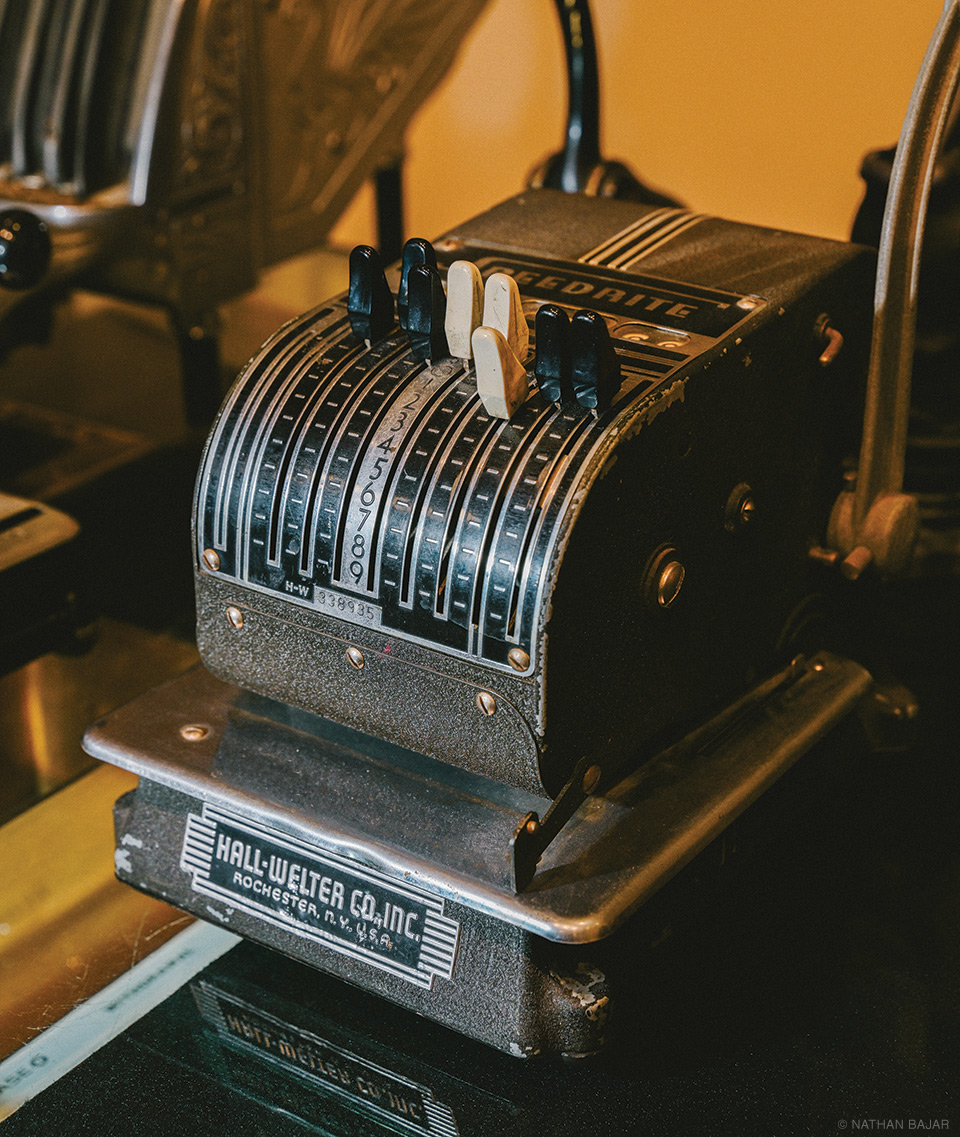
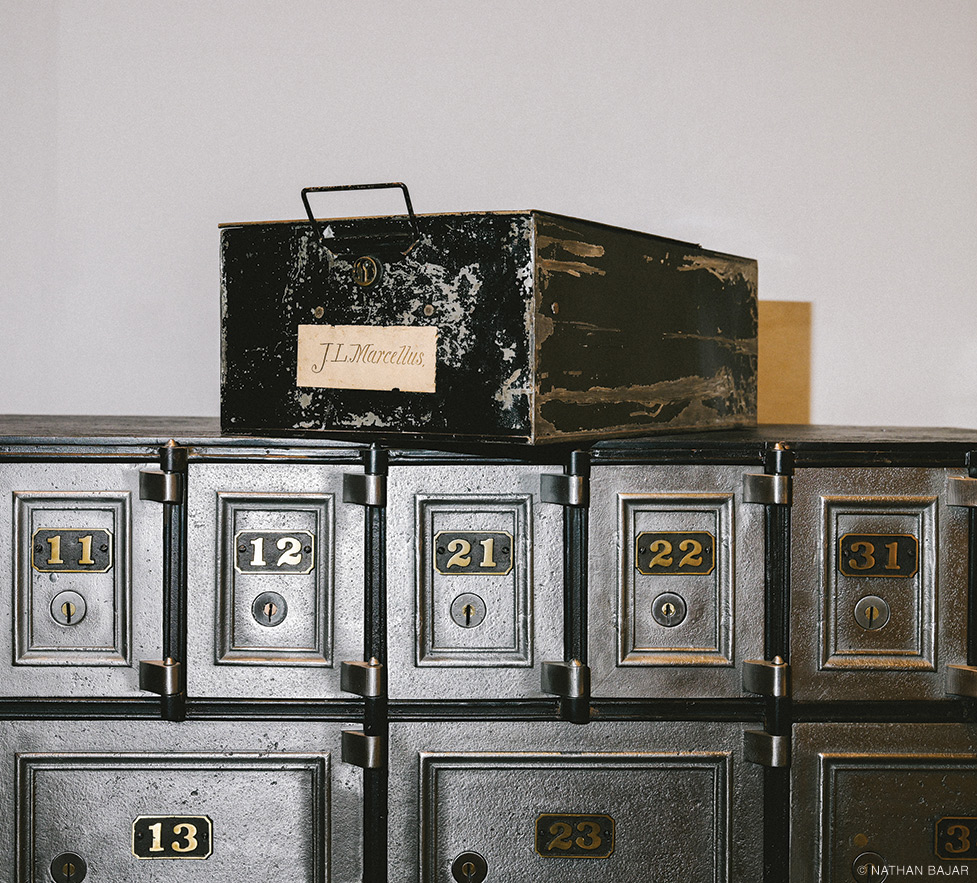
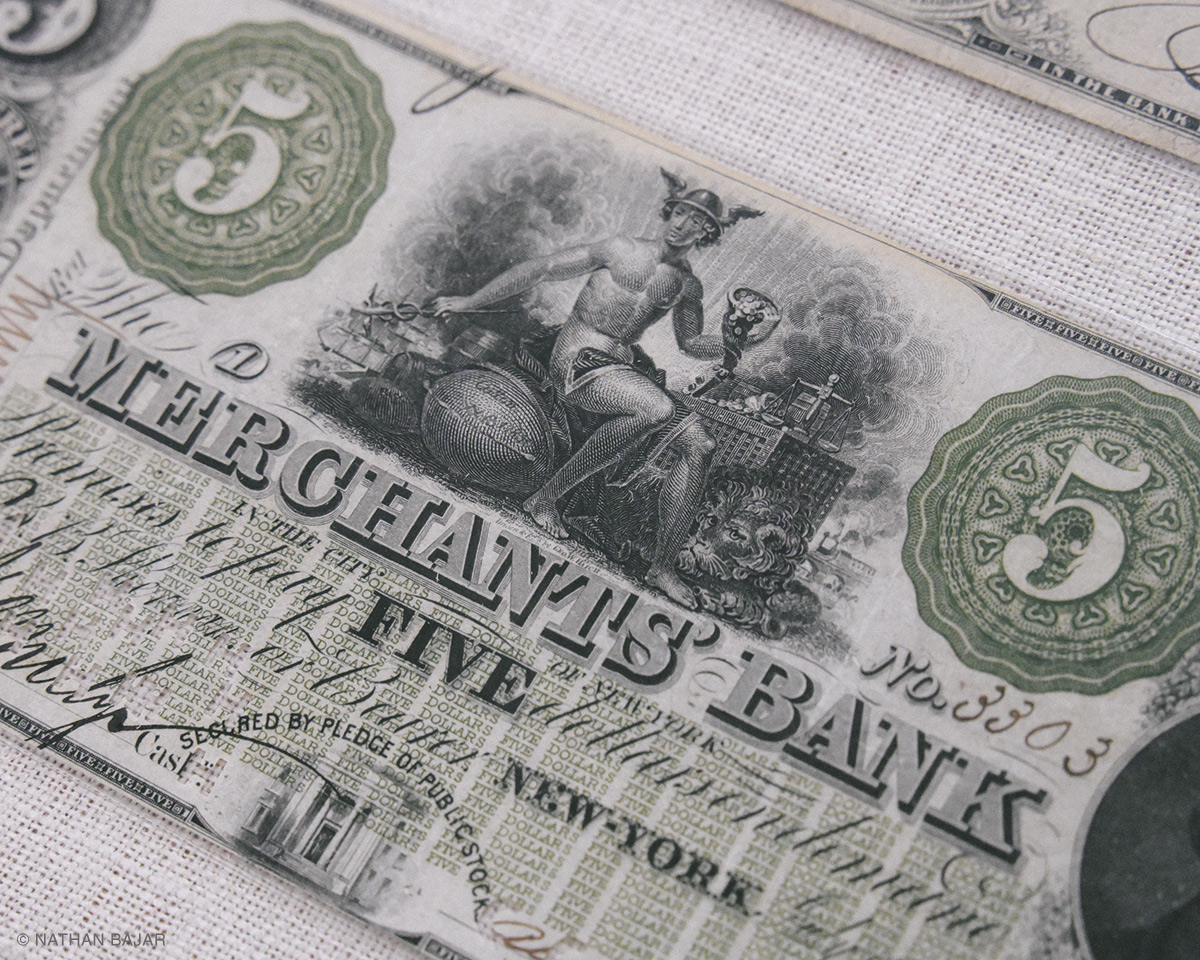
One of her main jobs at JPMorgan is collecting historical materials related to the bank—which has some 1,200 predecessor institutions. Sometimes that means searching on eBay, where she’s found cross sections of the Manhattan Company water pipes, or at auctions. She helped acquire a rare catalog of the watch collection of John Pierpont Morgan Sr., the powerful Gilded Age financier who ran the firm that ultimately became known as JPMorgan Chase. The catalog is now on display at a JPMorgan client center in Geneva.
She also works with employees who have a question about the firm’s history. “Maybe someone is writing a press release about JPMorgan’s role in the entertainment industry and wants to know how long we’ve participated in some capacity with media and entertainment,” she says. “Maybe they’re working on a new advertisement and are interested in seeing what advertisements looked like in the 1950s or ’60s.”
She also gives presentations and tours to customers, clients, and employees in the offices as well as at the bank’s state-of-the-art, climate-controlled storage facility in Brooklyn, which also serves as a gallery space.
In the summer of 2025 JPMorgan opened a 60-story headquarters in Manhattan. For the new building, Moskowitz helped install historical artifacts and imagery that tells the company’s 226-year history. One exhibit, for example, is full of historical signs that feature predecessors’ logos. Another has the famous water pipes.
The bank’s history is so vast that she says she is challenged every day. “If it was just the history of banking, that would be enough, or just New York would be enough,” she says. “But so much of what we talk about is tied to so many other parts of history that there’s always something new to learn.”
—Alyson Krueger C’07