America’s centennial celebration in 1876 was considered a smashing success, but 50 years later, the sesquicentennial event was, by most accounts, a flop, and it took place right here in Philadelphia.
Political bickering, delayed construction, the death of the director, and torrential rain all contributed to low attendance. The entrance’s centerpiece, a majestic “Tower of Light” that had been widely advertised, was not even completed before opening day.
The New York Times put it politely, in a June 1, 1926, article: “Some disappointment was expressed by visitors because of the incompleteness of the exposition, which is estimated by its officials as about 75 per cent ready. The larger buildings are completed, but few of the exhibits are in.”
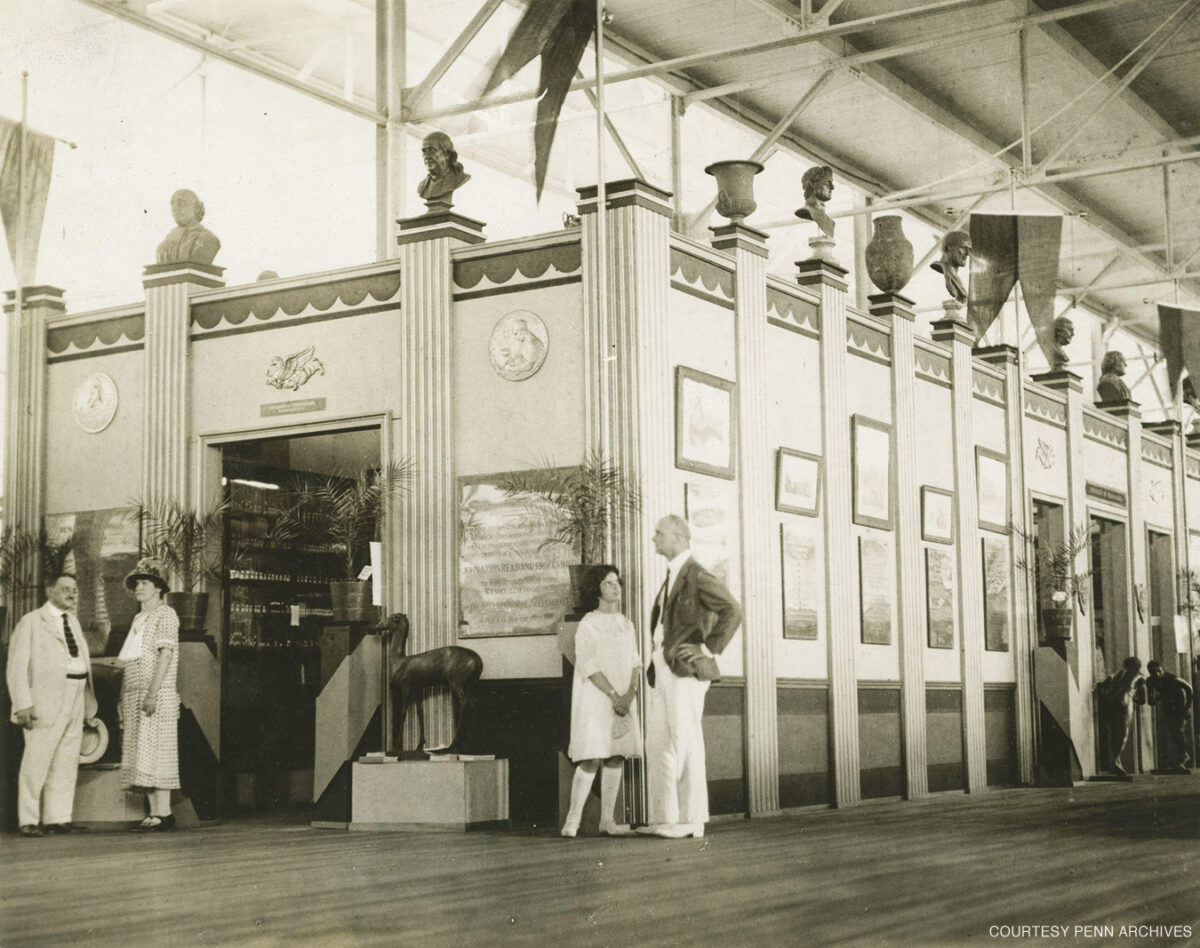
One bright spot, though, was the University of Pennsylvania’s booth in the education wing. Installed by George E. Nitzsche L1898, recorder of the University (and also founding editor of Old Penn, as the Gazette was called from 1902 to 1919), it drew connections between the school and the country’s founders.
Plaques on the outside highlighted Benjamin Franklin and John Nixon (a Penn Trustee who was the first to read the Declaration of Independence publicly), and a reproduction of the Declaration showed 10 University signers underlined in red ink. Inside the booth, more than 15,000 objects were on display telling the story of higher education in America, including Franklin’s original Leyden jars (used in his electricity experiments); Penn physicist Arthur Goodspeed’s x-ray tubes (used to create the first x-ray); a miniature replica of Penn’s first campus; 27 original Babylonian clay tablets; and a page from the Gutenberg Bible. All departments were represented, as well as many student organizations, such as the Mask and Wig Club.
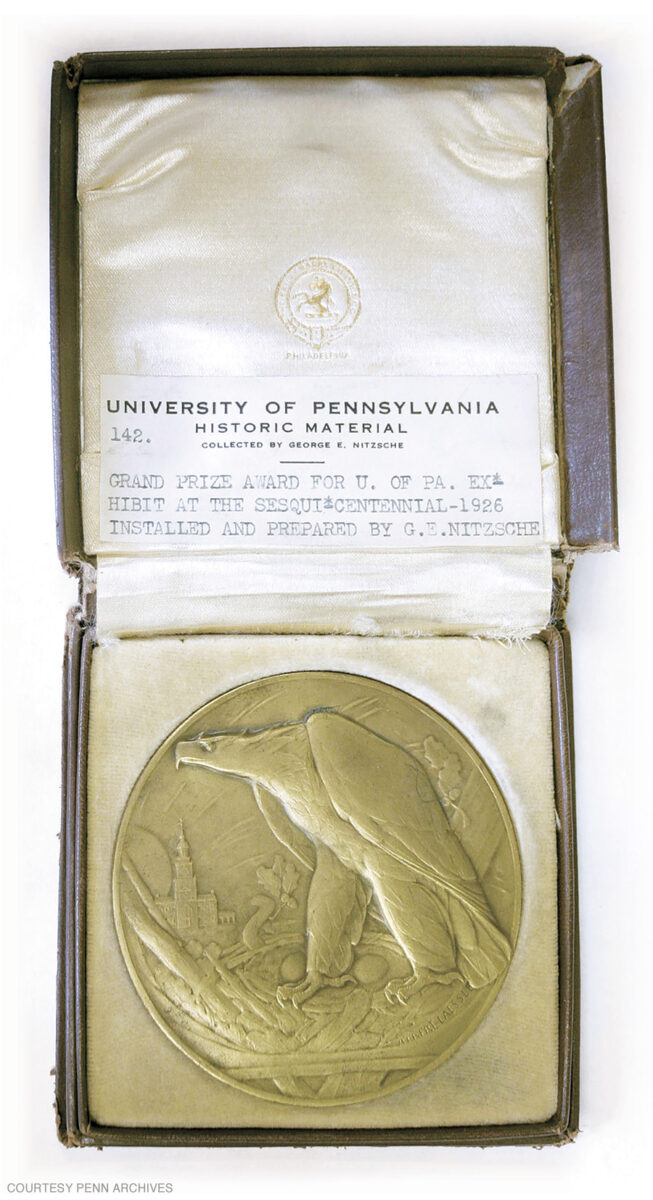
The booth took home a gold medal.
—NP