
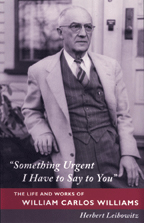
So Much Still Depends
A new biography of William Carlos Williams approaches the man and his work from some odd angles.

Briefly Noted
Jul|Aug 2012
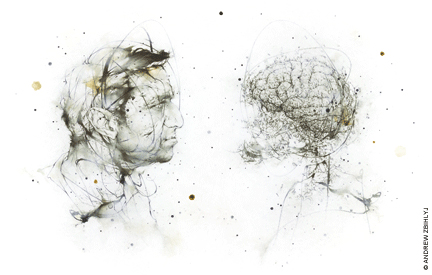
Trauma by Number
Alan Schwarz C’90

Bringing a Woman’s Touch to a Sensitive Ceremony
Lucy Eisenstein Waldman Nu’91

The Vision Thing Pays Off
Neil Blumenthal WG’10 and David Gilboa WG’10 GEng’10
Alumni Notes
Jul|Aug 2012
Obituaries
Jul|Aug 2012

Playful Pianos
Window, Jul|Aug 2012

Jul|Aug 2012
Volume 110, No. 6

Read Jennifer Egan’s New Story, Tweet by Tweet
A spy story, told in 140-character bits.

Penn faculty members join National Academy of Sciences
Penn profs make it their mission to solve all sorts of crippling diseases.
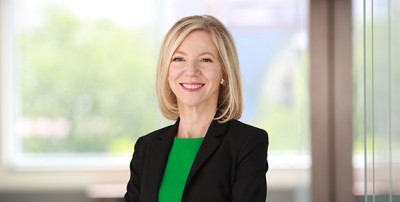
A Global Approach to Scholarship
From College Hall: Penn faculty and programs are taking the lead in integrating knowledge.

Time for the Maya
No, the ancient Maya did not predict that the world will end in December 2012. Yes, the Penn Museum is taking advantage of the popular fascination with that distinctly North American misinterpretation of the Maya calendar to mount a wide-ranging exhibit examining Maya notions of time and much more about this rich, still-thriving culture.

Character’s Content
Penn psychologist Angela Duckworth Gr’06 argues that character—not intelligence, quality of instruction, family situation, or income level—is the crucial determinant of achievement in school. Now she just has to figure out how to measure character—and influence it for the better.

Letters
May|Jun 2012

The New College Try
“I didn’t register how cold it really was until my head was under.”
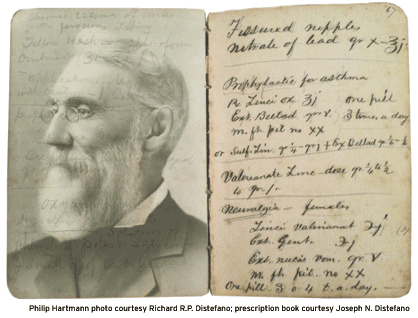
A Tale of Two Forbears
Two 19th-century brothers, raised on their family’s slave-worked plantation, left Penn for very different destinies.
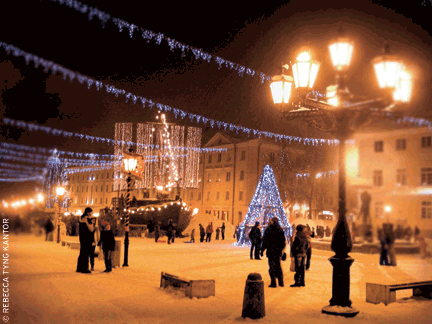
Country of Illusions
On Louis Kahn’s trail in Estonia, teasing out the facts from the fairy tale.

Hazards of Bra Shopping
Most women—of all body types—hate it. Some tips for a better fit.
Class of 2012 Waiting for Superman
Education reformer Geoffrey Canada will speak at Commencement
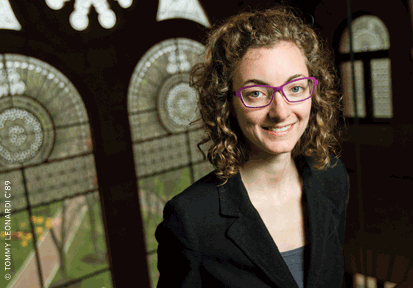
Two Penn Alumnae Win Luce Scholarships
Luce Scholars Aimee Bailey EAS’06 and Abby Seldin C’09 G’09
Undergraduate Tuition, Financial Aid Increase
Undergraduate costs to rise 3.9 percent, financial aid up 7.7 percent

Zen and the Art of DIY Electric Scooter Manufacture
Penn Electric’s DIY-ers put theory into practice—on wheels
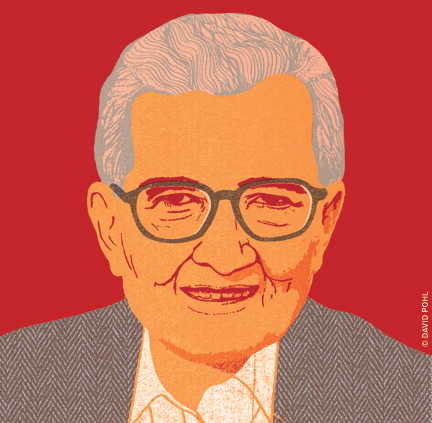
Amartya Sen and the Justice of the Fish
When Nobel Prize-winning economist Amartya Sen told a friend that he was to give a talk at Penn titled “Global Justice in the Contemporary World,” his friend voiced a word of caution. “He wondered whether it was wise to promise a speech on an unreal topic,” Sen recalled, with a laugh, at the Zellerbach Theatre. Sen, who became the first non-American to win the National Humanities Medal this year, spoke at the School of Arts and Sciences’ Levin Family Dean’s Forum on March 1. Though he himself was frail and soft-spoken, the economist’s message was bold: global justice “can be made into a much bigger force in this world.” Sen’s speech encompassed a lot of what he covers in his latest book, The Idea of Justice. Working toward justice, for him, is “preventing manifestly severe injustice.” We need to focus on tackling the gross injustices in the world, he urged—everything from famine to global warming—“even though the world after that removal would not be in any sense perfectly just.” It’s fitting that Sen, whose contributions to economic theory have led governments and international institutions to develop practical solutions to alleviate famine and poverty, tried to leave students with a plan of action. “Our concentration has to be on global reasoning, particularly public discussion,” he said. “It’s important for the voice of the adversely placed and disastrously affected to come through interactive discourse, rather than only through violent skirmishes and threats of terrorist attack.” The first step toward global justice, he elaborated, is discussion. Although global democracy is a worthy ideal, Sen reminded students to think practically: since it’s impossible to build a global, democratic state in the near future, “we have to understand democracy as a government of discussion,” Sen said. And although democracy hasn’t quite taken root worldwide, Sen believes that the ideal of public discussion is deeply ingrained in the history of countries across the world. Sen reminded the audience that the Buddhist Councils, which he characterized as an early model of public discussion, took place in India around 400 BCE. Public discourse isn’t just a Western ideal, Sen said; it is valued in many cultures, including the Middle East. Although frameworks for global discourse exist, Sen believes there’s a lot of room for improvement. The United Nations, for example, plays an important role in encouraging discourse, but according to Sen it is “hampered by the limited reach of the... Read More